Your School Deep Cleaning Checklist Is Probably Missing These Areas
Planning a school holiday deep clean? Use this school deep cleaning checklist to cover overlooked areas, floor care, washrooms, storage spaces and more.

TL; DR:
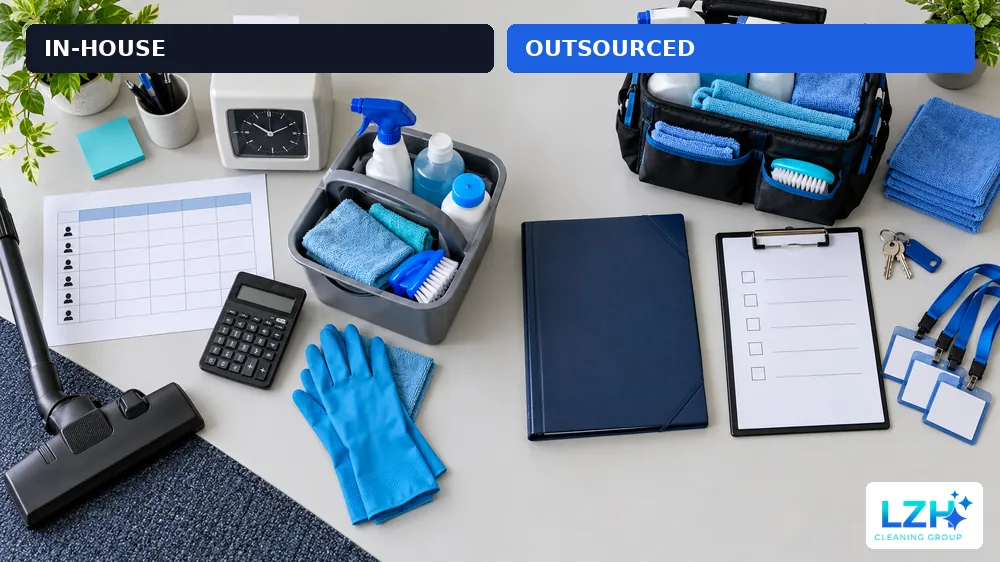
Compare in-house and outsourced cleaning by the full annual cost of meeting your premises’ needs. The better choice depends on your workload, the service standard required, and how much responsibility your team can take on.
Key Takeaways
Hiring a cleaner may seem cheaper than using a cleaning company, but the hourly wage is only part of the cost. You may also need to cover employer costs, holiday and absence of cover, supplies, equipment, recruitment and the time spent managing the work.
Outsourcing needs the same careful review. Compare quotes by checking which tasks, supplies, cover arrangements and extra services are included, then calculating the annual cost of each option for the same cleaning standard.
Employing a cleaner gives you direct control over their hours and daily priorities. Your business also takes responsibility for the support needed to keep that work running.
Work out the cleaner’s annual gross pay, then add employer to National Insurance, pension contributions, payroll, insurance and any recruitment costs. Remember to budget for paid holiday and cover during absences, as well as supplies, equipment and the time your team spends managing the work.
Costs depend on current rules and the employee’s circumstances. If holiday pay is already included in annual pay, count it only once.
Decide who will cover cleaning during employee absences, considering overtime, temporary staff or reassigned employees. Include extra pay and record time diverted from usual duties so you can distinguish additional spending from postponed work.
Recruitment also takes time, from advertising and interviews to induction. Budget for likely staff turnover without assuming you will need to recruit every year.
List the cleaning products and equipment you’ll need, from chemicals, cloths, gloves and mops to vacuum cleaners and any specialist machines required by the cleaning brief. Budget for repairs, servicing and replacement, spreading equipment costs over their useful life for the annual comparison while showing initial purchases separately in your cash budget.
Allow time for someone to order supplies and check stock. Keeping products in a cupboard is not enough if essential items—or replacement vacuum bags—are missing.
Track the time spent arranging shifts, ordering supplies, checking standards, and dealing with problems, including work done by office managers or owners between other jobs. Even small tasks add up, so apply a reasonable hourly employment cost to the time involved.
Be clear about what outsourcing would actually change. It may free a manager’s time for other work, but that does not automatically reduce their salary cost.
A provider’s fee covers its staffing, running costs and profit. The written agreement should explain which services and resources your business receives for that price.
Compare both options over a full year, including cleaning, cover, supplies, equipment, extra services and management time. Keep one-off costs such as recruitment, equipment purchases and an initial intensive clean separate, so the first year is not confused with later years.
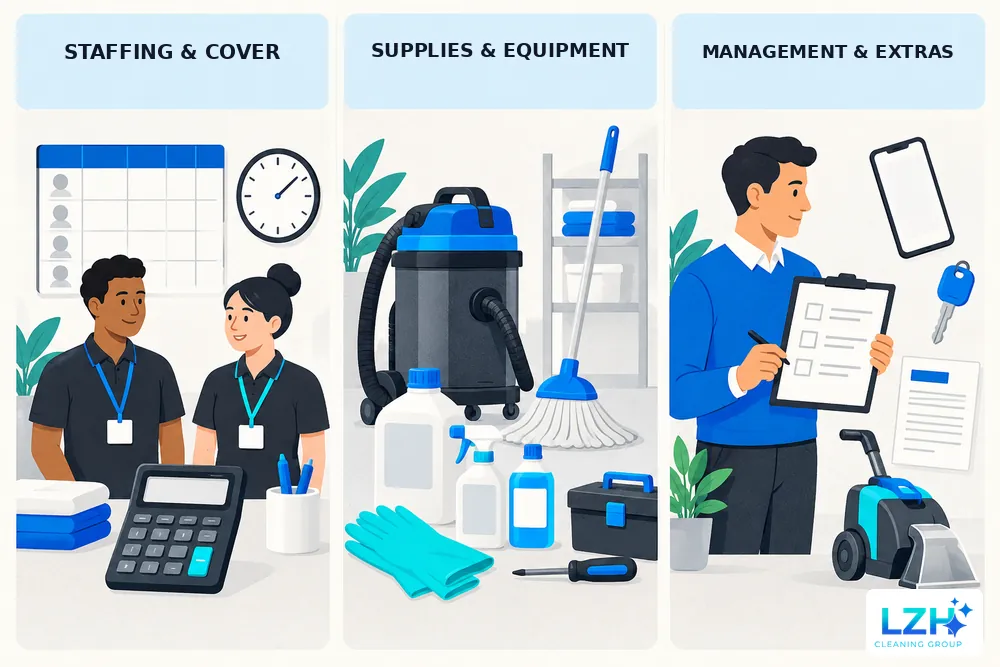
The example allowances suggest outsourcing costs £3,800 less overall, including £600 less management time. Replace these figures with your own costs or quotes, treat VAT consistently and test how each option would respond to changes in workload.
A cheaper cleaning arrangement only helps if the work is done properly. Agree what will be checked in washrooms, kitchens, floors and other priority areas, and decide who will inspect the work and how often.
Set out how missed tasks will be reported and put right. When comparing options, use recorded costs such as repeat cleans and emergency callouts, rather than guessing savings from improved morale or fewer sick days.
In-house cleaning can work well when you have enough regular work, equipment, and supervision to support dedicated staff. Outsourcing may be better if you need fewer hours, flexible cover, or less day-to-day management. A mix of both can also make sense, with your team handling daytime tasks and a provider managing scheduled or specialist cleaning.
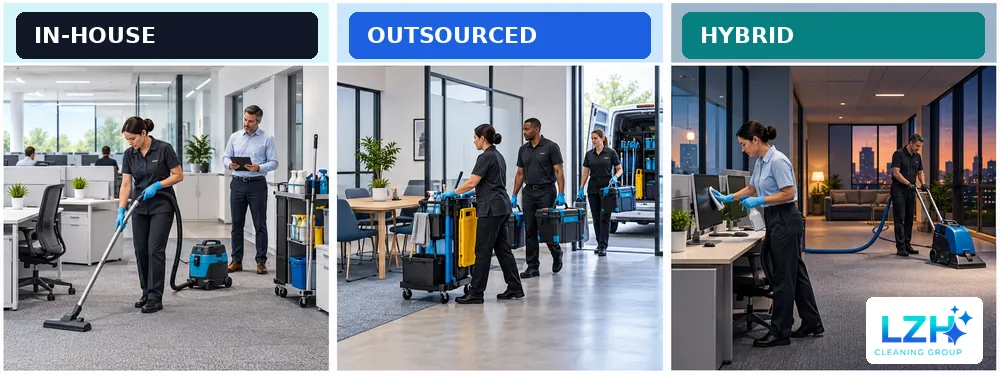
Before switching arrangements, compare the full costs, including cover, supplies, equipment and management time. Check whether TUPE protections apply when cleaning transfers between staff and contractors and get advice on your circumstances.
At LZH Cleaning Group, we plan cleaning around your premises, working hours and priorities. We provide commercial cleaning in Bedford and nearby areas, with daily, weekly and custom schedules.
Our clients benefit from:
Before hiring or changing providers, put a clear quote beside your current costs. We can discuss your building, cleaning priorities, and preferred schedule so you know what our proposal covers.
We will help you work through the requirements and provide a free quote for your premises.
Call 01234 637781 or email office@lzhcleaninggroup.co.uk to request your free quote and compare your options with clear costs in front of you.