Your School Deep Cleaning Checklist Is Probably Missing These Areas
Planning a school holiday deep clean? Use this school deep cleaning checklist to cover overlooked areas, floor care, washrooms, storage spaces and more.

TL;DR: Many office cleaning routines focus on visible areas but miss smaller surfaces used throughout the day, so reviewing how people use the workplace helps identify these overlooked touchpoints. A more complete routine should include shared equipment, door furniture, kitchen appliances, and washroom fixtures, as these details contribute to a cleaner, more welcoming office.
Key Takeaways
A floor can look spotless, and the bins can be empty, but that does not always mean an office is properly clean. Some of the most frequently handled surfaces are also the easiest to overlook because they are small, shared, and rarely look dirty at first glance.
Door handles, printer controls, kitchen appliances, and meeting room equipment are touched throughout the working day. This article looks at the office touchpoints that standard cleaning routines often miss and explains how businesses can maintain a cleaner, more comfortable workplace.
Office touchpoints are surfaces that employees, visitors, contractors, and delivery personnel regularly handle. Although touching these surfaces is part of everyday office life, fingerprints, dust, food residue, and other contaminants can gradually build up when they are not cleaned consistently.
The problem is that many touchpoints do not look obviously dirty, so they are easy to ignore during a quick cleaning. A more effective routine considers how people actually move through the office and gives extra attention to the surfaces they use along the way.
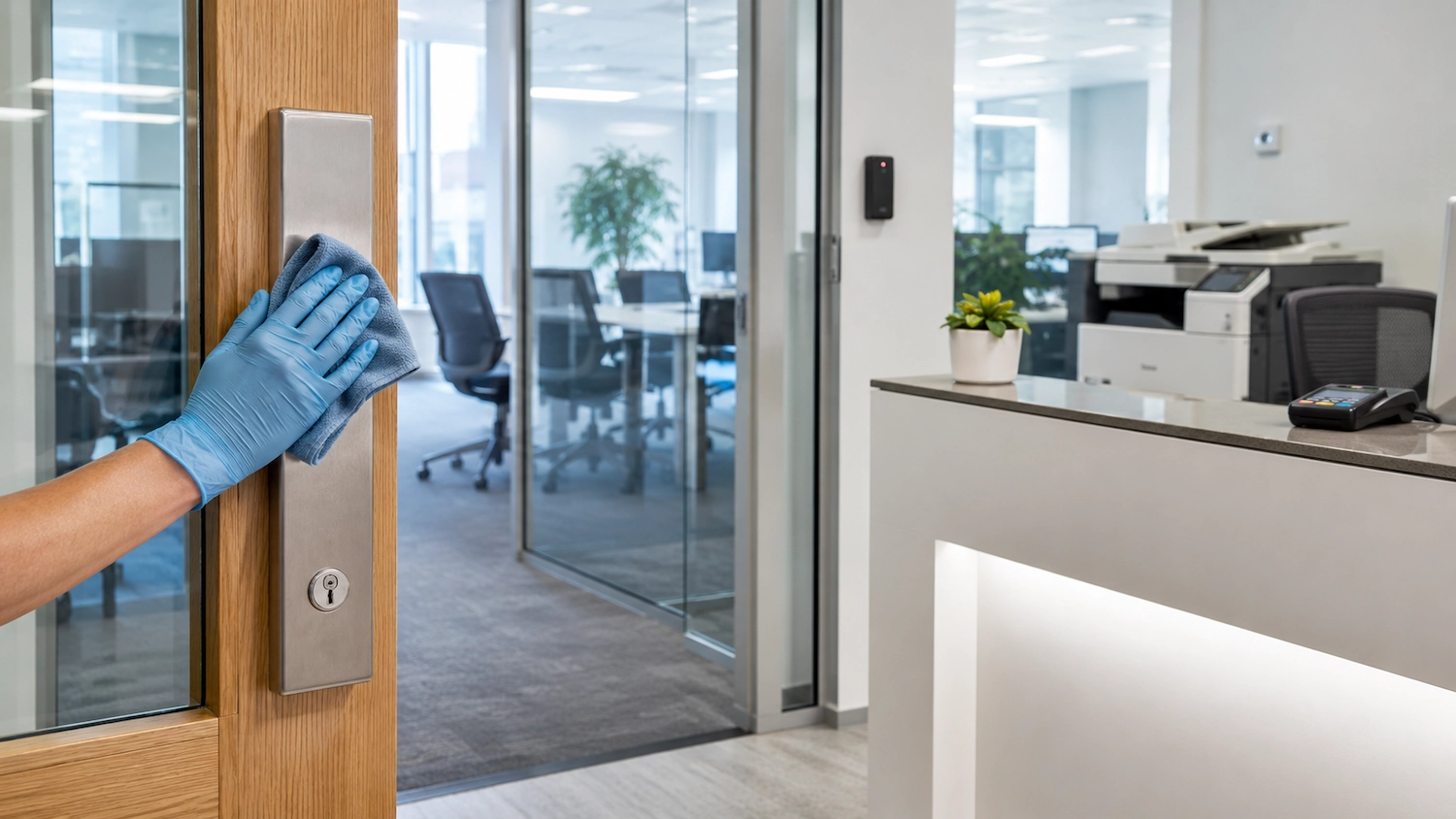
Office doors are touched throughout the day by employees, visitors, contractors, and delivery drivers. Entrances and doors near kitchens, washrooms, and meeting rooms are particularly busy.
Cleaning should include handles, push plates, door edges, access buttons, and the surrounding areas. These often-used surfaces can quickly collect fingerprints, dirt, and germs.
Light switches, security keypads, intercom buttons, and access panels are easy to overlook despite being used regularly.
They should be cleaned carefully with suitable products and minimal moisture. Adding them to the routine checklist helps ensure they are not missed.
Desks may be cleaned regularly, but keyboards, mice, phones, headsets, and touchscreens often receive less attention.
This is especially important for hot desks and shared workstations. A safe cleaning process helps keep shared equipment hygienic without damaging sensitive electronics.
A printer or photocopier may be used by an entire department, which means many people touch its buttons, trays, handles, and touchscreen. Despite this, shared office machines often fall outside the usual desk-cleaning routine.
The areas most likely to need attention include:
Loose paper, packaging, toner residue, and abandoned documents can also make the surrounding area look untidy. Regular cleaning helps keep the equipment presentable and makes the whole workspace feel better organised.
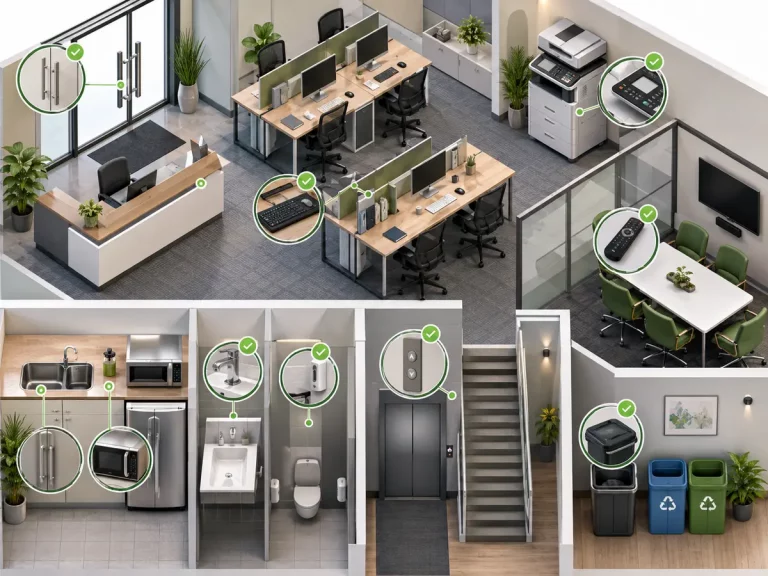
Meeting rooms may sit unused for part of the day and then host several groups in quick succession. Tables are normally wiped, but chair arms, remote controls, video conferencing panels, whiteboard trays, presentation devices, and shared stationery can easily be missed.
These details matter when meeting rooms are used for client appointments, interviews, or training sessions. Visitors notice the condition of the space, and dusty equipment or marked furniture can weaken an otherwise professional first impression.
Office kitchens can look tidy while still containing many overlooked touchpoints. Microwave handles, kettle switches, coffee machine buttons, fridge doors, cupboard handles, dishwasher controls, and water dispensers may all be used several times during a single break.
Particular attention should be given to:
Food residue and spills can be collected around these areas when employees prepare meals in a hurry. Cleaning them with products suitable for food preparation spaces helps keep the kitchen pleasant without damaging appliances or leaving unsuitable residue behind.
Washrooms are normally included in office cleaning schedules, but smaller fixtures can still be missed when the focus is on toilets, sinks, mirrors, and floors. Taps, flush buttons, cubicle locks, soap dispensers, hand dryers, and door handles all receive frequent contact.
Supplies should be checked at the same time because cleanliness is not only about appearance. A washroom may look presentable, but empty soap dispensers, missing toilet tissue, or unavailable hand-drying facilities will still leave employees and visitors with a poor impression.
Reception areas receive plenty of visual attention because they are the first spaces most visitors see. However, reception phones, sign-in tablets, pens, doorbells, visitor badges, chair arms, and side tables can still be overlooked.
These surfaces may be handled by people from outside the organisation as well as regular employees. Cleaning them consistently helps create a welcoming entrance and shows that the business pays attention to smaller details.
Stair rails and lift buttons may be used by almost everyone in a multi-storey office, but they do not belong to one specific room. This makes it easy to leave out of a cleaning checklist organised around desks, kitchens, toilets, and meeting spaces.
Lift doors, internal handrails, control panels, and mirrors may also need attention, depending on the building. Corridors should be reviewed in the same way, including shared doors, wall switches, and equipment positioned along busy routes.
Office chairs are often vacuumed around rather than cleaned directly. Armrests, adjustment levers, back supports, and the upper edges of chairs can collect dust, crumbs, marks, and skin oils over time.
Shared seating in break rooms, waiting areas, and collaborative spaces deserves particular attention because different people use it throughout the day. The cleaning method should suit the material, as fabric, leather, vinyl, and plastic surfaces cannot always be treated in the same way.
Emptying a bin is not the same as cleaning it. Bin lids, handles, pedal controls, internal edges, and the surrounding floor can collect spills and residue, especially in kitchens and staff break areas.
Recycling stations can also become messy when waste is placed in the wrong container, or items are left beside an overflowing bin. Regular checks help prevent unpleasant smells and stop a small waste area from making the wider office feel neglected.
Cleaning equipment can spread dirt from one area to another when clothes, mop heads, buckets, or vacuum attachments are not managed correctly. A cloth used in a washroom, for example, should not later be used on a kitchen counter or desk.
Storage areas also need to be kept organised so products can be used safely, and equipment can dry properly between visits. Clear procedures for separating, washing, replacing, and storing cleaning tools support more consistent results throughout the building.
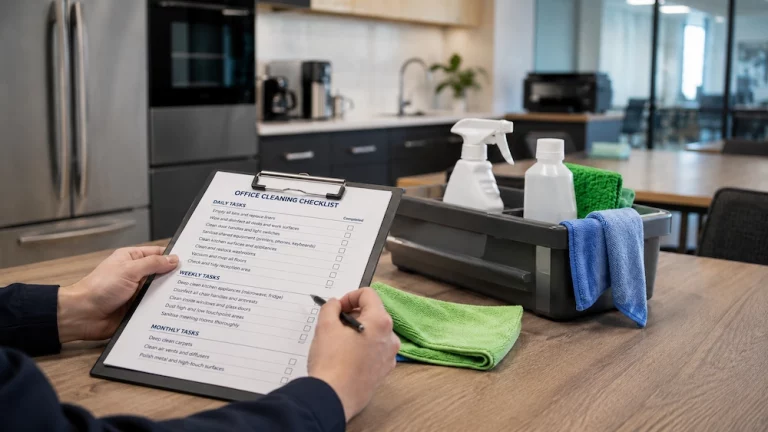
A better cleaning plan begins by observing how the office is actually used. Businesses should consider the busiest routes, shared facilities, visitor numbers, working patterns, and the times when kitchens, washrooms, and meeting rooms receive the most use.
When reviewing the schedule, consider:
Tasks can then be divided into daily, weekly, and periodic duties instead of treating every surface in the same way. Frequently handled areas may need regular attention, while less-used spaces can receive a more detailed clean at planned intervals.
LZH Cleaning Group provides professional office cleaning in Bedford and surrounding areas, with cleaning plans shaped around each workplace’s layout, operating hours, and priorities. Businesses looking for reliable support can learn more about our office cleaning services and how we tailor solutions to suit different environments.
Our team can support businesses with regular office cleaning or one-off services covering floors, washrooms, kitchens, waste areas, workstations, and shared spaces. With insured and DBS-checked operatives, flexible schedules, and a focus on dependable service, LZH helps businesses maintain cleaner workplaces without unnecessary disruption.
If smaller details keep slipping through your current cleaning routine, it may be time for a more carefully planned approach. LZH Cleaning Group can look at how your workplace is used and create a schedule that gives busy touchpoints, shared facilities, and visitor-facing areas the attention they need.