TL;DR:
Office carpets cleaned with hot water extraction generally need around 6 to 12 hours to dry, while some low-moisture methods dry sooner. Carpet construction, remaining moisture, and room conditions determine when the space is ready to use.
Key Takeaways
- Calculate downtime from when the final area is cleaned, rather than the appointment’s start time.
- Confirm overnight ventilation settings and any drying equipment before the visit.
- Keep chair mats off and follow your cleaner’s advice before returning furniture.
- Contact your cleaner if carpets remain wet beyond the agreed drying window.
Office carpets cleaned with hot water extraction usually take around 6 to 12 hours to dry, although carpet type, leftover moisture and room conditions can change that. Low-moisture methods may dry faster, but the best option depends on your carpet, so ask your cleaner what they recommend and when the area can reopen.
If you’re arranging the booking, check whether staff can return the next morning and which rooms will be available. Agreeing this in advance can help you avoid last-minute desk moves or a damp meeting room.
How Cleaning Methods Change Drying Time
Check which method the quote covers, as each process leaves a different amount of moisture behind. The choice should follow your carpet manufacturer’s care instructions.
Hot Water Extraction Drying
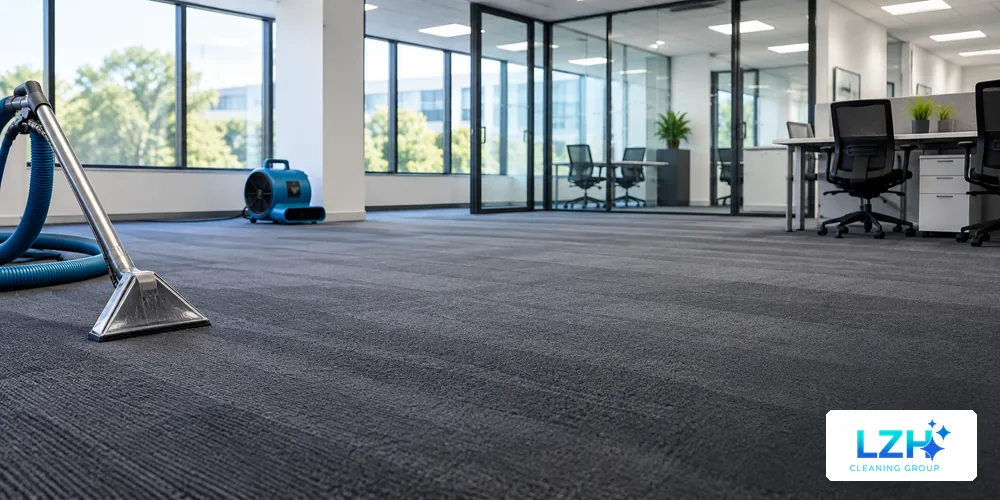
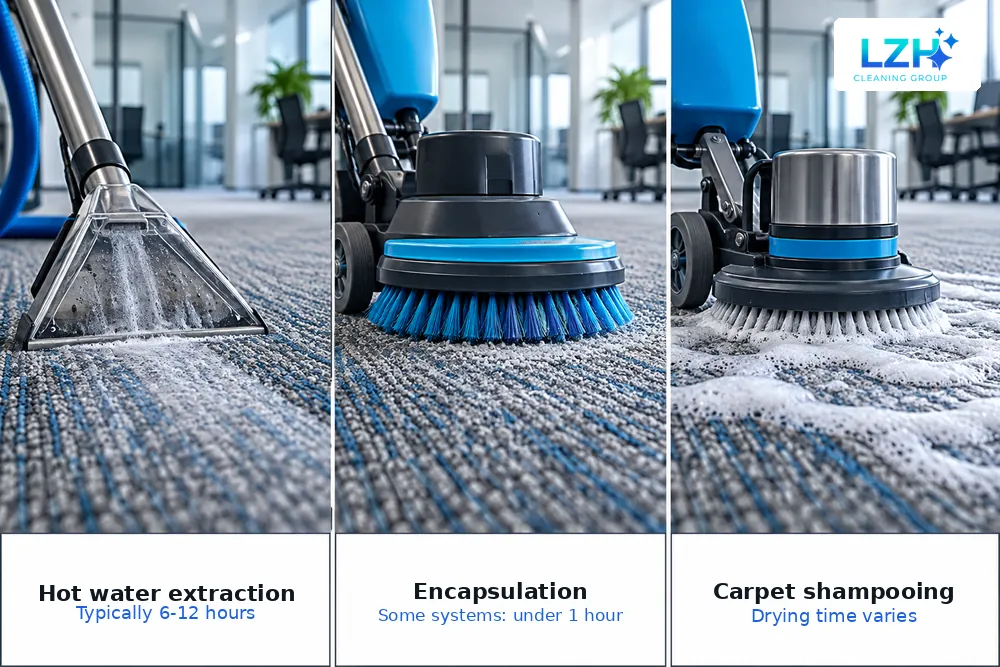
Hot water extraction typically takes 6–12 hours to dry, depending on the carpet, room conditions and remaining moisture. Ask your cleaner for a realistic drying estimate before reopening the office.
Start counting from when each area is finished, not when cleaning begins. For example, if a meeting room is cleaned two hours after reception, it has two fewer hours to dry before staff return.
Faster Drying with Encapsulation
Encapsulation uses a small amount of cleaning solution to capture dirt before vacuuming, making it useful for routine maintenance between deeper cleans. Some systems dry in under an hour, although actual results vary by product, carpet and conditions.
Ask your cleaner whether encapsulation is suitable for your office. It can work well for routine marks and soil, but ingrained dirt may need a deeper clean.
Drying After Carpet Shampooing
If a quote refers to carpet shampooing, ask what the process involves and how the solution will be removed. The description alone does not tell you how much moisture will remain.
Confirm how long the carpet will need to dry and whether vacuuming is required afterwards. When comparing quotes, check what each service includes and whether the proposed method suits your reopening time.
Why Office Carpets Stay Damp
A small meeting room may dry more slowly than an open-plan office after the same treatment. Mention rooms with poor ventilation or areas that stayed damp after previous cleans.
Fibre Type and Carpet Backing
Fibre type, pile depth, and backing affect how a carpet responds to moisture. A thin commercial carpet tile may behave differently from a thicker carpet in a boardroom or executive office.
Tell your cleaner if the premises contain different carpet types. If you have installation records or manufacturer care instructions, share them before the visit rather than assuming one method will suit every room.
Closed Rooms and Humid Air
Drying slows when moisture cannot move away from the carpet into drier air. Enclosed rooms and humid conditions can therefore need more attention than open areas with effective ventilation.
Check whether the building’s ventilation runs overnight, including rooms controlled separately from the main office. If it switches off when employees leave, speak to the building manager about the settings needed during drying.
Water Left Behind After Extraction
The amount of solution applied and the effectiveness of extraction influence how long drying takes. Thorough moisture recovery matters, particularly where heavily soiled areas need additional treatment.
Kärcher recommends a final suction pass, followed by ventilation or air blowers, to help remove moisture. Ask your provider how they will manage drying on your premises, especially if the booking leaves only a short gap before staff return.
Carpet Under Office Furniture
Small meeting rooms, spaces under desks and areas screened by furniture may receive less airflow. These can need to check even when the open-plan floor feels dry.
Explain which rooms must reopen first and identify routes that staff cannot avoid. The cleaner can then discuss a workable sequence instead of discovering those restrictions on arrival.
When Staff Can Return
Keep people off damp carpets until they are dry, and your cleaner confirms the area can reopen. Walking on them too soon can:
- Reintroduce dirt to freshly cleaned fibres.
- Transfer moisture onto smooth flooring and create a slip risk.
- Require signs and alternative routes where needed.
The Carpet and Rug Institute recommends restricting access until carpets are completely dry and leaving chair mats off during drying.
Tell employees, early starters, evening workers, and contractors about the temporary restrictions before cleaning begins.
Help Office Carpets Dry Faster
Agree ventilation and equipment access before cleaning day, especially if another company manages the building. Confirm who can authorise changes to heating or ventilation controls.
Check Overnight Ventilation
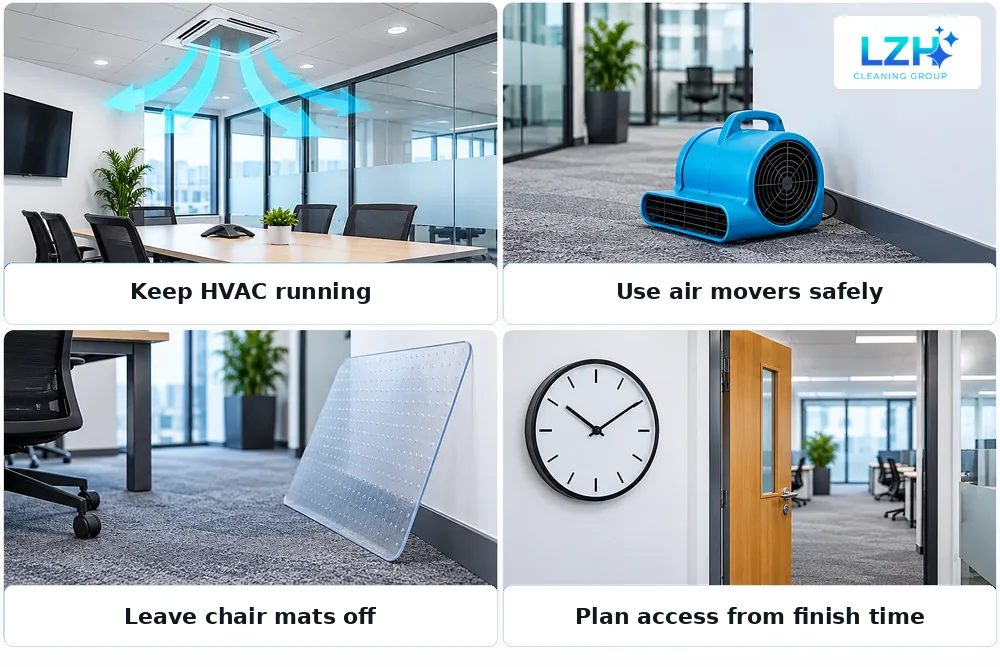
Speak to the building manager about keeping suitable heating, ventilation or air conditioning running while the carpet dries. Turning up the heating alone will not deal with humid air trapped inside a closed room.
Open windows only when weather, security, and building rules allow it. On a humid or rainy evening, your cleaner may recommend mechanical ventilation or dehumidification instead.
Arrange Air Movers Where Needed
Ask whether air movers would help in rooms with poor airflow and whether they’re included in the quote. Confirm how long they’ll run and who will switch them off and collect them.
Agree where equipment can operate safely without blocking doors or essential routes. Avoid improvising with portable heaters or moving electrical equipment onto damp areas.
Leave Chair Mats Off
Leave cleaned areas uncovered so moisture can escape, including the spaces normally covered by chair mats. Wait until the carpet underneath is dry before putting mats or rugs back.
Ask when furniture can be returned and whether protective tabs are needed beneath particular legs. Follow the cleaner’s instructions for your furniture and carpet rather than using a fixed waiting time for every item.
Plan Around Your Opening Time
Tell your cleaner when staff and visitors need access again, allowing enough time for cleaning and drying. For example, a room finished at 9 pm has 11 hours before an 8 am opening, so check whether that is realistic for the method and conditions.
For larger offices, consider cleaning zones on separate visits so staff can use another room or floor. A Friday booking may allow more drying time before Monday, but check out weekend use, ventilation settings and arrange an inspection before reopening.
Before confirming the visit, ask:
- Which cleaning method suits our carpets?
- When will the last area be finished?
- How long should access be restricted?
- Who will check the carpet before the staff returns?
- What should we do if an area is still damp?
Tell staff to clear floors and secure paperwork. Also confirm who handles furniture, keys, alarms and changes to the building’s overnight settings.
What to Do if Carpets Stay Wet
Contact your cleaner if the carpet is still noticeably wet beyond the time they advised, or if it seems to have stopped drying. Tell them which areas are affected when cleaning is finished and whether ventilation or drying equipment has been running.
Keep those areas out of normal use while you seek advice. Report persistent musty smells, returning marks or unusually wet patches so the provider can assess whether further extraction or drying support is needed.
Why Choose LZH Cleaning Group?
At LZH Cleaning Group, we plan office cleaning around your premises and the people who use them. We provide services in Bedford and the surrounding areas, and you can discuss carpet shampooing as an extra alongside your office cleaning service so we can consider everything together.
We’re fully insured and our operatives are DBS-checked. We’ll work to an agreed cleaning plan, with flexible scheduling and no long-term commitments. When you enquire, tell us your opening hours, access arrangements and priority rooms, and we’ll discuss how we can fit the service around your workplace.
Arrange Office Carpet Cleaning in Bedford
Worried about fitting carpet cleaning into your working week? Contact LZH Cleaning Group with your office location, approximate carpeted area and preferred date, plus the time staff need to return.
Call 01234 637781 or request your free tailored quote.