Your School Deep Cleaning Checklist Is Probably Missing These Areas
Planning a school holiday deep clean? Use this school deep cleaning checklist to cover overlooked areas, floor care, washrooms, storage spaces and more.

TLDR : A reliable office cleaning schedule should separate daily, weekly, and periodic tasks, so every area gets the right level of attention at the right time. Daily cleaning keeps high-use spaces hygienic; weekly cleaning prevents visible build-up, and periodic cleaning handles deeper tasks that protect the condition and appearance of the workplace.
Key Takeaways
Many offices seem clean at first glance, but issues arise when tasks are done too infrequently or key details are missed. Bins may be emptied, and floors vacuumed regularly, yet kitchens can still smell; meeting rooms can feel dusty, and washrooms can still attract complaints.
A good office cleaning schedule assigns the right tasks to daily, weekly, and periodic cleaning, helping keep the workplace clean and manageable. This guide explains which tasks belong in each category and what affects cleaning frequency.
Office cleaning is most effective when tasks are completed at the right intervals. Daily cleaning keeps high-use areas tidy and hygienic.
Weekly and periodic cleaning tackle deeper tasks that prevent dirt and dust from building up over time. Together, these routines help maintain a cleaner and more professional workplace.
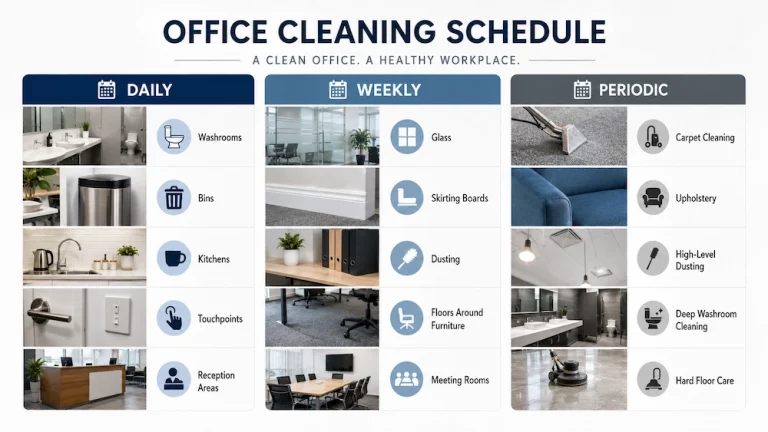
Daily office cleaning should focus on high-use areas that affect hygiene, comfort, odours, and first impressions.
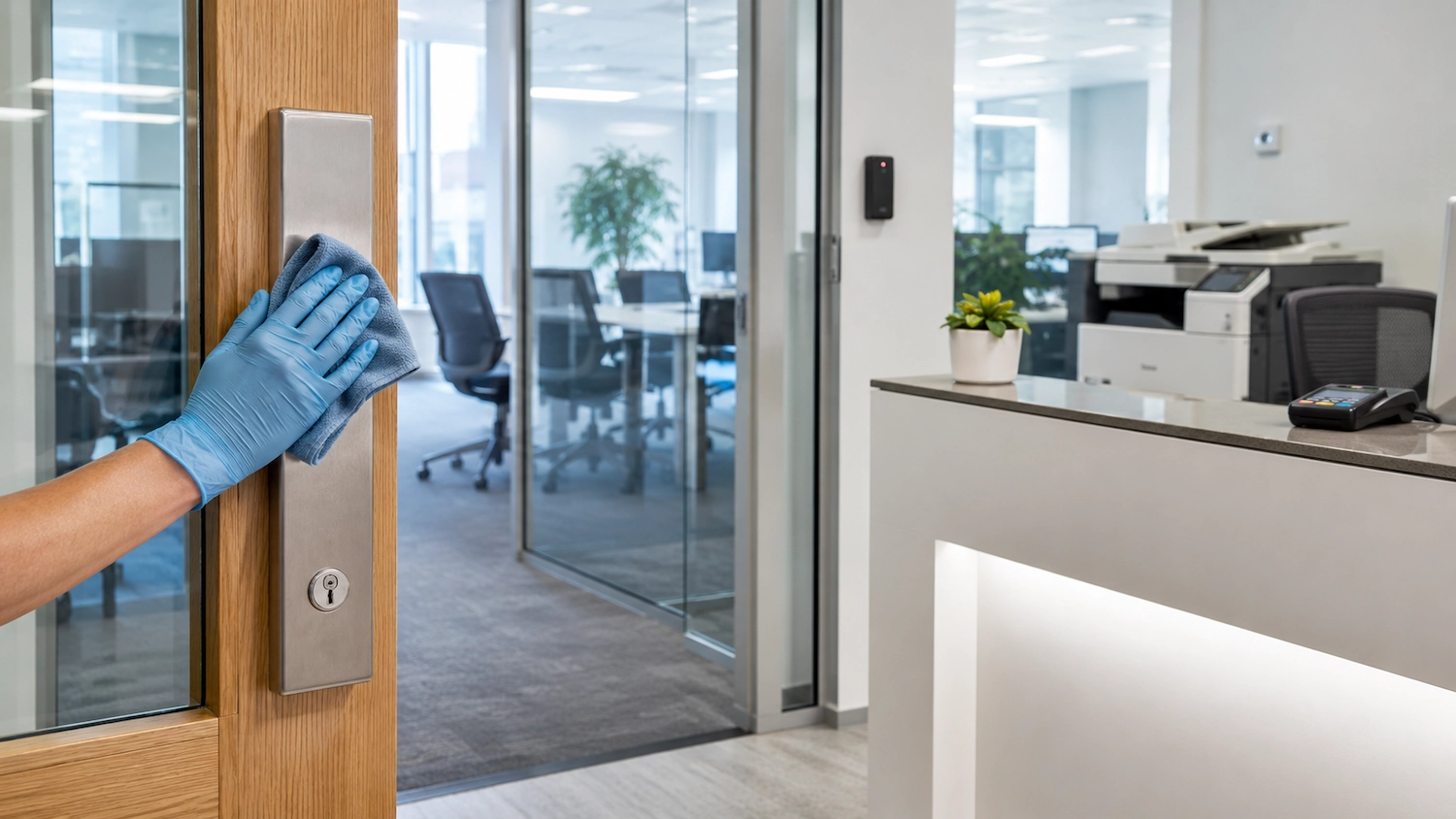
Desks, shared workstations, phones, door handles, light switches, and other high-touch surfaces should be cleaned regularly according to the agreed scope. A clear-desk policy helps cleaners work efficiently and prevents tasks from being missed.
Office kitchens can quickly feel neglected when spills, crumbs, and overflowing bins are left unchecked. Daily cleaning should cover worktops, tables, sinks, taps, appliance exteriors, and bins, while staff should clear old food and personal items unless agreed otherwise.
Washrooms should be cleaned daily in most offices to maintain hygiene, comfort, and a positive workplace impression. A daily routine should cover toilets, basins, taps, mirrors, floors, touchpoints, consumables, and checks for odours, bins, and visible marks.
The entrance and reception area shape first impressions, so dirt or clutter can quickly affect how people view the business. Daily cleaning should cover mats, reception surfaces, touchpoints, and visible debris, adjusted for foot traffic and weather.
Bins are easy to overlook, but overflowing bins and full recycling points can quickly create odours and make an office feel untidy. Regular emptying, liner replacement, and clear waste disposal procedures help keep the workplace clean and prevent confusion.
Weekly cleaning helps prevent gradual build-up and keeps the office looking fresh and well maintained over time.
Weekly floor cleaning should target edges, accessible areas under desks, skirting boards, corners, and hard floors where dirt builds up. Floors may look clean at first glance, but dust and grime around furniture, chairs, and entrances can make the office appear neglected over time.
Fingerprints and smudges on glass doors, partitions, and internal windows can quickly make an office look untidy. Weekly cleaning of internal glass, door plates, and partitions helps maintain a professional appearance, though high-use areas may need more frequent attention.
Weekly dusting should cover overlooked areas such as window sills, skirting boards, shelves, and vents where dust gathers. Dust builds quickly in busy offices and can make rooms feel stale and surfaces look dirty.
Kitchen touchpoints such as microwaves, fridge handles, cupboard fronts, taps, and bin areas should be cleaned weekly to remove grease and food residue. Fridge responsibilities should also be clearly agreed, including who removes expired food.
Meeting rooms may not be used daily, but they often host clients and important discussions, so they should stay presentable. Weekly cleaning should cover tables, chairs, glass, floors, presentation equipment, and other less-used spaces.
Periodic cleaning covers deeper tasks that do not need weekly attention but help prevent dirt build-up and maintain office standards.
Vacuuming removes surface dirt, but busy carpets still need periodic deep cleaning to remove embedded dirt, stains, and odours. Upholstered chairs, reception seating, and fabric partitions also benefit from occasional deep cleaning to remove dust and marks.
High shelves, ceiling corners, vents, light fittings, exposed pipework, and tall storage units often collect dust that routine cleaning misses. These areas are best handled through periodic cleaning.
Even with daily cleaning, washrooms still need periodic deep cleaning to tackle limescale, grout, drains, and urinals. Deep cleans help maintain standards and keep washrooms fresh, especially in busy offices.
Hard floors in entrances, corridors, kitchens, and shared areas may need machine cleaning to remove dirt and restore their appearance. The required frequency depends on the flooring type and level of foot traffic.
There is no one-size-fits-all office cleaning schedule because every workplace is used differently. Factors such as staff numbers, visitor traffic, shared facilities, and hybrid working patterns all influence how often certain areas need cleaning.
The type of business and even the time of year can also affect cleaning requirements. Reviewing the schedule regularly helps ensure it continues to match changes in occupancy, operating hours, and workplace activity.
Most office cleaning complaints stem from an unclear cleaning scope, not poor cleaning. A good cleaning scope should clearly define:
A clean office is easier to maintain when staff and cleaners understand their responsibilities and work together. Keeping desks accessible, clearing personal items, and reporting spills promptly helps cleaners do their job effectively.
Staff should manage personal items, confidential documents, food containers, and maintenance issues, while cleaners handle waste, washrooms, floors, and dusting. Clear expectations within the cleaning agreement help prevent confusion and ensure consistent standards.
Start by reviewing the office area by area, including entrances, workstations, meeting rooms, kitchens, washrooms, and shared spaces. Then decide which tasks need daily, weekly, or periodic attention based on how often each area is used.
Prioritise hygiene, waste, odours, and visitor-facing areas, while scheduling deeper maintenance as needed. Once the routine is agreed, document it clearly so staff, managers, and cleaners understand expectations and can review performance consistently.
An office cleaning schedule should be reviewed when workplace use, staffing, or operational needs change. Common signs your workplace cleaning schedule needs reviewing include:
LZH Cleaning Group provides commercial and office cleaning services across Bedford and surrounding areas, with cleaning plans tailored to each workplace and its needs. The team helps businesses create practical schedules that balance daily, weekly, and periodic cleaning tasks.
Whether you manage an office, commercial property, or shared workspace, a clear cleaning plan makes standards easier to maintain. LZH Cleaning Group works with clients to improve consistency, reduce missed tasks, and keep workplaces looking for their best.
A clean office starts with a clear office cleaning schedule that sets out the right tasks, frequencies, and expectations for everyone involved. If your cleaning routine no longer fits your workplace, LZH Cleaning Group can help create a tailored plan.