Your School Deep Cleaning Checklist Is Probably Missing These Areas
Planning a school holiday deep clean? Use this school deep cleaning checklist to cover overlooked areas, floor care, washrooms, storage spaces and more.

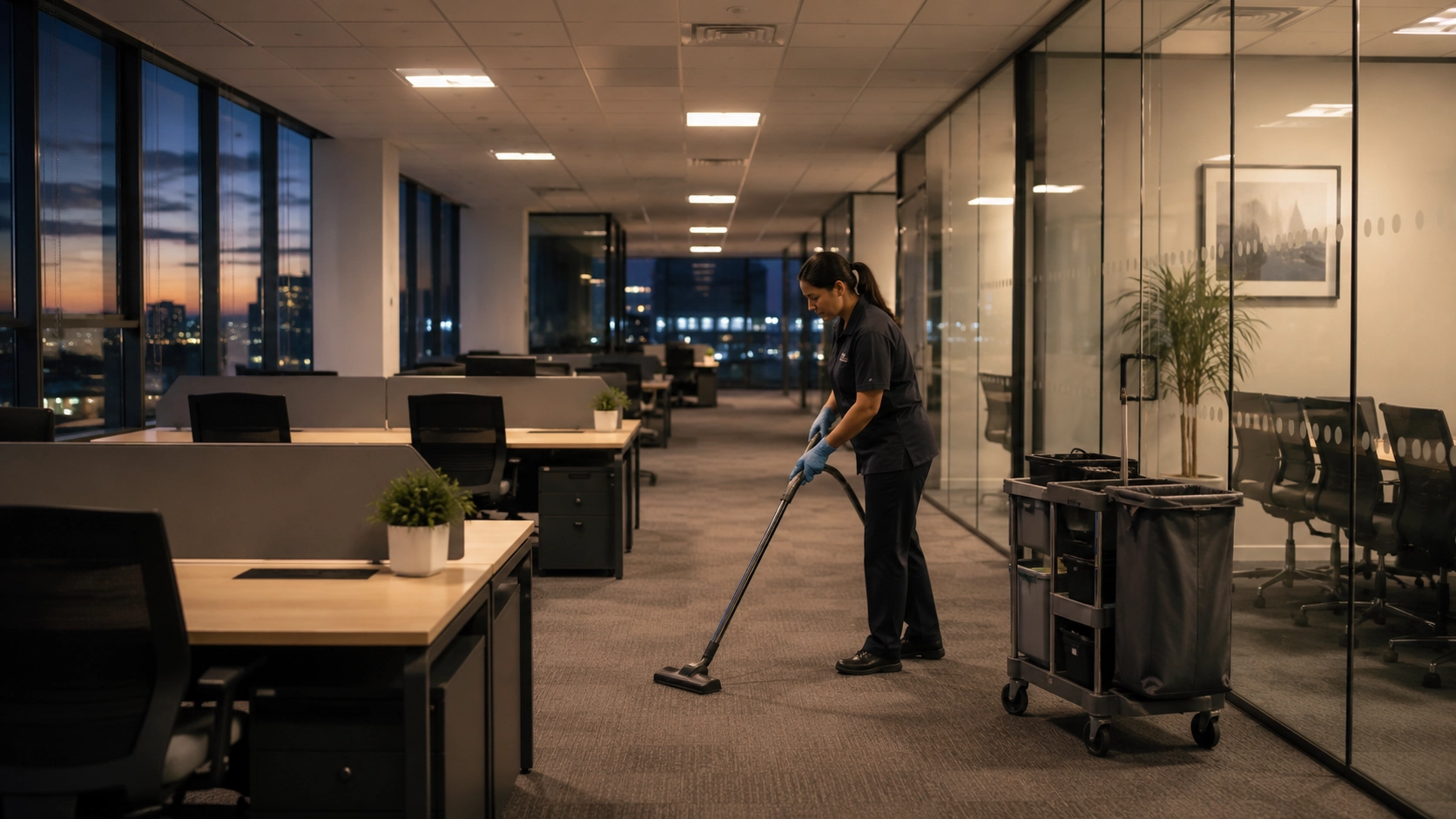
TL; DR: After-hours office cleaning helps keep the workplace clean without vacuum noise, wet floors, or cleaning activity interrupting staff during the day. It is most effective when access, security, task priorities, and communication are agreed before the service begins.
Key Takeaways
Office cleaning is essential, but it can become distracting when vacuum cleaners, cleaning trolleys, and wet floors appear during the busiest part of the day. After-hours office cleaning solves this problem by completing routine tasks when most or all employees have left.
However, it takes more than simply asking cleaners to arrive later. Access, security, communication, and cleaning priorities must be agreed in advance. Here is how the arrangement works and how to decide whether it suits your workplace.
After-hours office cleaning takes place outside a company’s usual working hours. Cleaners may arrive in the early morning, evening, overnight, or at weekends, depending on when the building is quietest.
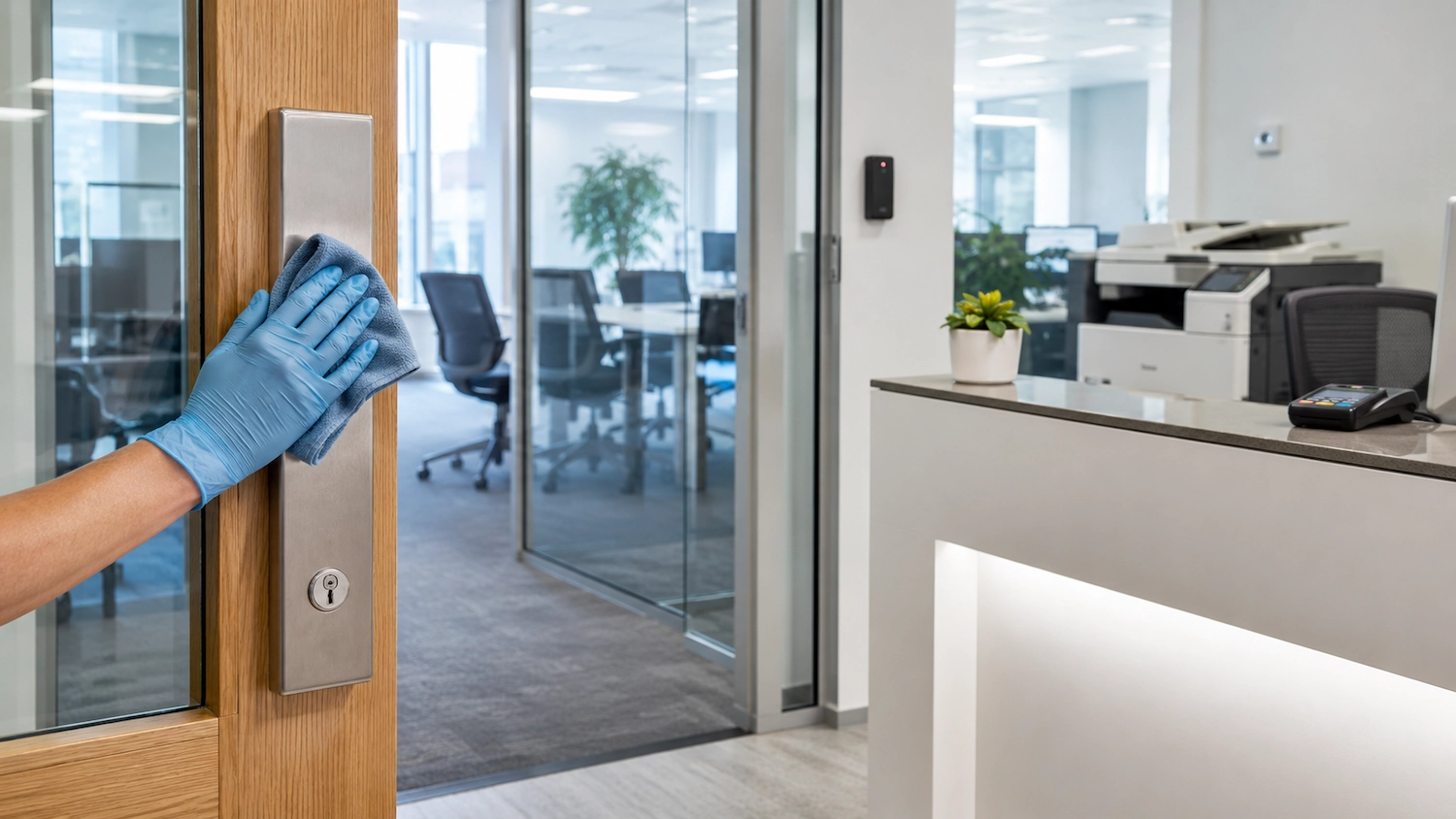
The service can include vacuuming, mopping, dusting, emptying bins, cleaning washrooms, refreshing kitchens, and wiping shared touchpoints. Larger jobs, such as carpet cleaning or floor treatments, can also be scheduled when rooms have enough time to dry.
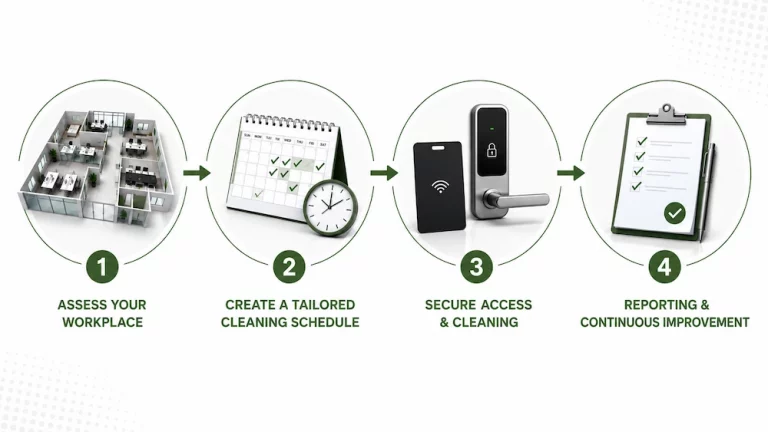
The process normally begins with a walkthrough in the workplace. The cleaning provider reviews the office layout, business hours, high-traffic areas, security arrangements, and tasks that need to be completed during each visit.
These details are then used to create a tailored cleaning schedule. If your workplace needs broader support beyond routine office tasks, look at these offers commercial cleaning services for business premises that need flexible cleaning plans, public-area cleaning, floor care, washroom cleaning, and other workplace cleaning support.
Businesses may provide approved cleaners with keys, access cards, alarm codes, or entry through a designated member of staff. There should always be clear rules covering who holds access credentials, when they can be used, and how problems are reported.
At the end of each visit, cleaners may be responsible for switching off lights, closing windows, locking doors, and setting up the alarm. A simple arrival and departure record gives managers reassurance that the premises were cleaned and secured correctly.
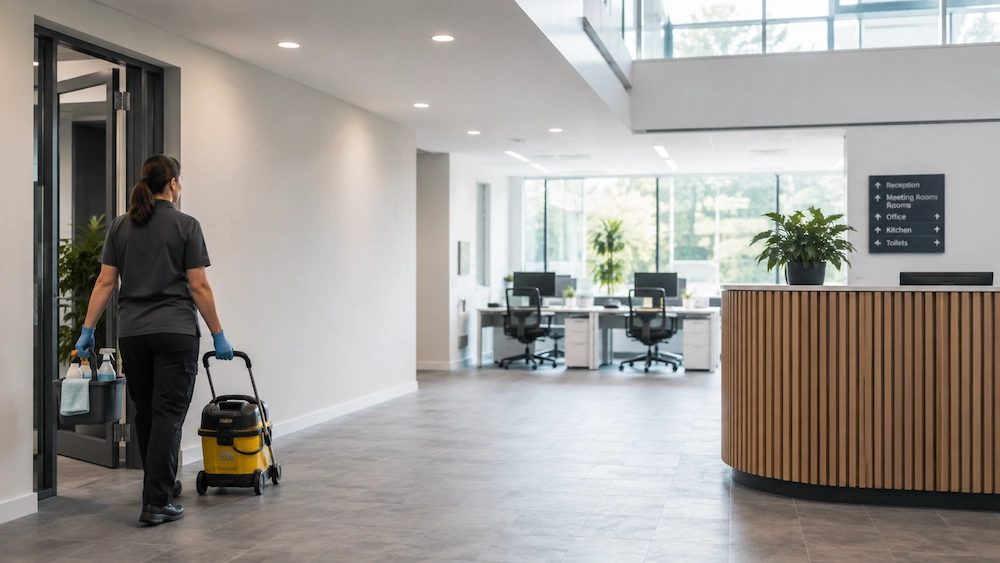
The biggest advantage is reduced disruption. Employees can hold meetings, answer calls, use shared spaces, and concentrate on their work without having to move around cleaning equipment or wait for an area to become available.
Cleaners may also work more efficiently in an empty office. They can move through meeting rooms, kitchens, washrooms, and open-plan areas in a sensible order without repeatedly stopping or returning because a space is still occupied.
After-hours cleaning usually works well for offices with predictable closing times. It can be particularly useful for professional practices, shared workspaces, customer-facing businesses, and open-plan offices where daytime cleaning would create noise or inconvenience.
It may be less suitable for buildings that operate around the clock or regularly host evening workers. In these cases, a split schedule may work better, with quieter areas cleaned during the day and busier areas handled later.
Start by identifying when the office is genuinely quiet rather than simply when its published opening hours end. Consider evening meetings, flexible workers, contractors, international teams, and employees who regularly stay late.
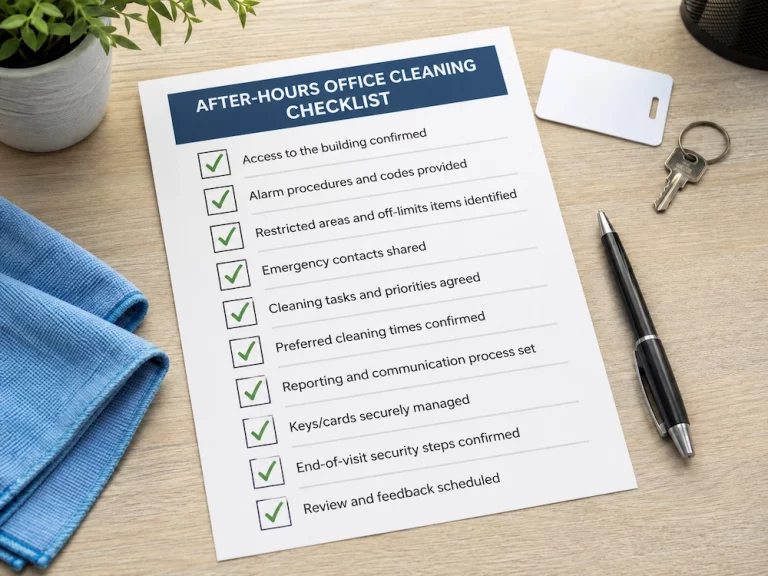
Clear answers make it easier to compare providers and avoid surprises after the service begins. If access, timing, or reporting remains uncertain, resolve those details before committing to an after-hours schedule.
Allowing cleaners into an empty workplace requires trust, but businesses should still use sensible safeguards. Ask how cleaners are screened, trained, supervised, and instructed to handle confidential areas before agreeing to the service.
Employees should store sensitive documents rather than leave them on desks. Locked cabinets, clear-desk policies, labelled restricted rooms, and written access instructions protect the business while helping cleaners understand exactly where they can work.
Because managers may not see the cleaning team regularly, communication needs to be planned. A nominated contact, shared log, email address, or digital reporting system can be used to request extra work, report missed tasks and confirm schedule changes.
Staff should also understand what the cleaners are expected to do. If cleaning computer screens, washing cups, moving paperwork, or clearing personal items is not included, explaining this early prevents misunderstandings and keeps expectations realistic.
After-hours cleaning is not right for every workplace, so it helps to check a few practical points first:
Compare the full service, access arrangements, reporting process, and expected results before choosing a provider.
Begin with a detailed site walkthrough involving the cleaning provider and the person responsible for the premises. Review entry points, alarms, fire procedures, waste areas, storage locations, priority rooms, delicate surfaces, and anything that cleaners must avoid.
It can help to review the arrangement after the first few visits. Ask staff for specific feedback, check whether priority areas are being cleaned consistently, and adjust the timing or task list before small issues become regular frustrations.
LZH Cleaning Group provides tailored office cleaning for businesses in Bedford and surrounding areas. We can arrange cleaning around the way your workplace operates, helping your team enjoy a clean and welcoming office without unnecessary interruptions.
Our trained, fully insured, and DBS-cleared cleaners follow an agreed plan covering the areas your business uses. From workstations and meeting rooms to kitchens, washrooms, floors, bins, and shared touchpoints, we focus on reliable service and consistent standards.
Your employees should not have to pause meetings, avoid wet floors, or compete with vacuum noise while trying to work. A carefully planned after-hours service allows essential cleaning to happen quietly in the background, leaving the office ready for the next day.
Contact LZH Cleaning Group to discuss your tailored quote today.