Your School Deep Cleaning Checklist Is Probably Missing These Areas
Planning a school holiday deep clean? Use this school deep cleaning checklist to cover overlooked areas, floor care, washrooms, storage spaces and more.

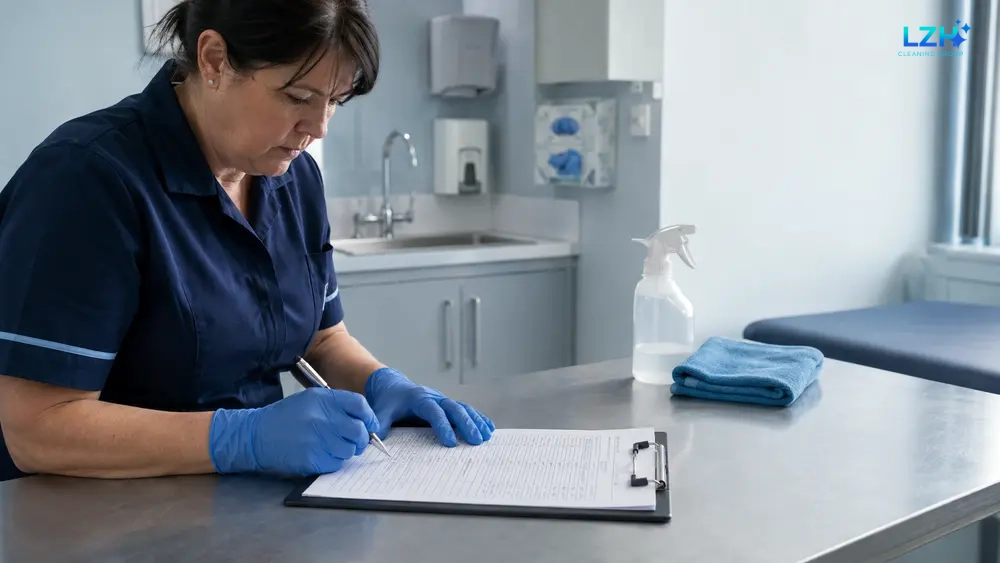
TLDR: Healthcare cleaning records should provide a clear trail of accountability, showing what was cleaned, when it was completed, who carried out the work, and how missed tasks or quality issues were handled. A signature alone offers limited assurance unless the records also support proper checking, follow-up, and verification
Key Takeaways
A cleaning sheet with a date, ticks and a signature may look reassuring, but healthcare cleaning records must go beyond confirming attendance. They should clearly show what was cleaned, when it was done, who was responsible, and whether any issues or missed tasks were recorded.
This detail matters because healthcare cleaning records support accountability, NHS standards, defined responsibilities, auditing, monitoring, and transparency results. Good healthcare cleaning records should help managers verify real performance, not just store paperwork files.
One of the easiest mistakes is treating a completed cleaning sheet as proof that an area met the required standard. For example, a cleaner may sign off a consultation room at 7:30pm, confirming attendance only, not cleaning details.
Healthcare cleaning records can become box-ticking exercises, but useful records provide detail to reconstruct events if complaints arise. Managers should see who cleaned areas, scheduled tasks, exceptions, meeting CQC expectations for clear responsibilities and compliance checks.
The exact paperwork varies between healthcare settings because dental practices, clinics, and hospitals require different levels of cleaning record detail. Even so, reliable documentation should still make the key facts easy to establish at a glance.
The record should clearly show the date and the specific time or cleaning period when the work was completed. This matters when multiple cleaning rounds occur daily, different teams share spaces, or managers must trace issues to specific times.
It should also make the cleaning frequency easy to understand. Some tasks are carried out daily, others several times during operating hours, and some on a planned schedule based on risk level and agreed cleaning requirements for the area.
There should be a clear way to identify the person or team responsible for each cleaning task. There must be clear identification of responsible person or team, as vague initials undermine accountability, traceability, and issue follow-up process.
Responsibility must be clearly defined between cleaning and healthcare staff, as different areas fall under agreed frameworks accordingly. Without that clarity, tasks can be missed or wrongly assumed, creating gaps in cleaning standards.
“General clean completed” tells a manager very little, as it does not show what was actually done or where the work took place. A stronger record links cleaning activity to specific areas or agreed checklists covering rooms, corridors, reception, high-touch points.
The National Standards of Healthcare Cleanliness clearly define responsibilities, elements, frequencies, risk categories, and high-touch requirements. The key takeaway is simple; records need enough detail to show that important tasks are not hidden inside a single vague tick box.
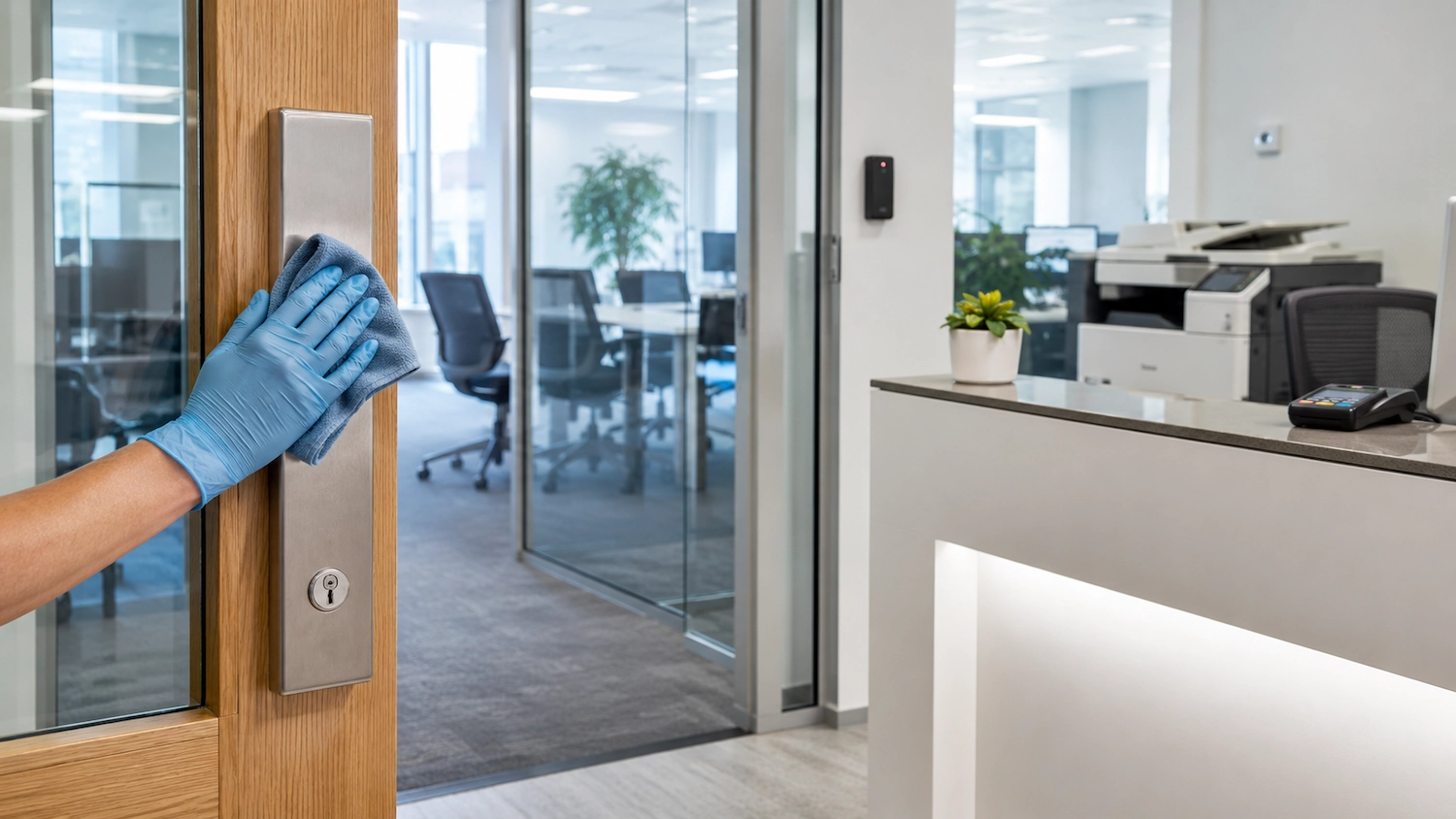
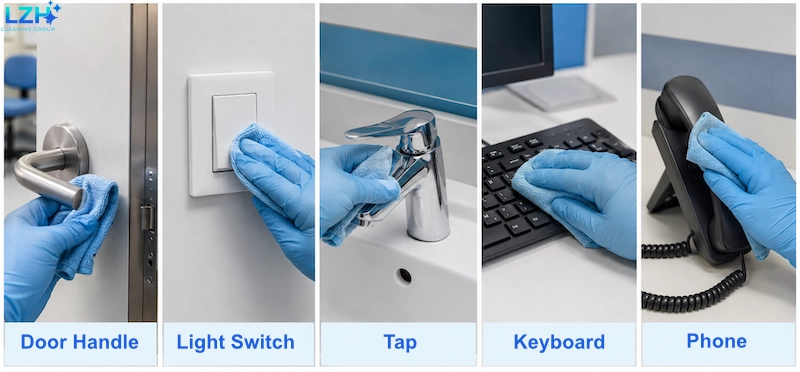
A room can look clean while high-touch surfaces are inconsistently cleaned. Items like door handles, switches, taps, keyboards and phones are frequently touched, and CQC guidance highlights their importance in cleaning schedules.
A label such as “waiting room cleaned” does not confirm these critical surfaces were properly addressed. Records should make high-touch routines visible and verifiable without adding unnecessary paperwork.
A healthcare cleaning record showing perfect completion daily for months may look impressive but still warrants closer scrutiny. Real healthcare environments are rarely simple, with access issues, spills, equipment faults, and occupied rooms affecting completion of work.
Good documentation should record exceptions, so incomplete work is not hidden behind a completed checklist. A useful record shows what could not be done, why, whether resolved later, supporting CQC accountability expectations requirements.
Another common weakness appears when cleaning records are treated as their own quality-control system, but they are not. A completed checklist only confirms tasks were ticked, whereas quality verification confirms the finished area meets required standards.
These two checks should work together, not be confused, and NHS England’s 2025 standards reinforce governance, auditing, accountability. Verification includes inspections, audits, spot checks or feedback, ensuring distinction between checklist completion and acceptable standards.
Finding a problem during an inspection is not necessarily evidence of a bad cleaning system, but repeated issues without documented follow-up are far more concerning. A clear route from discovery to resolution should be recorded, typically following this sequence:
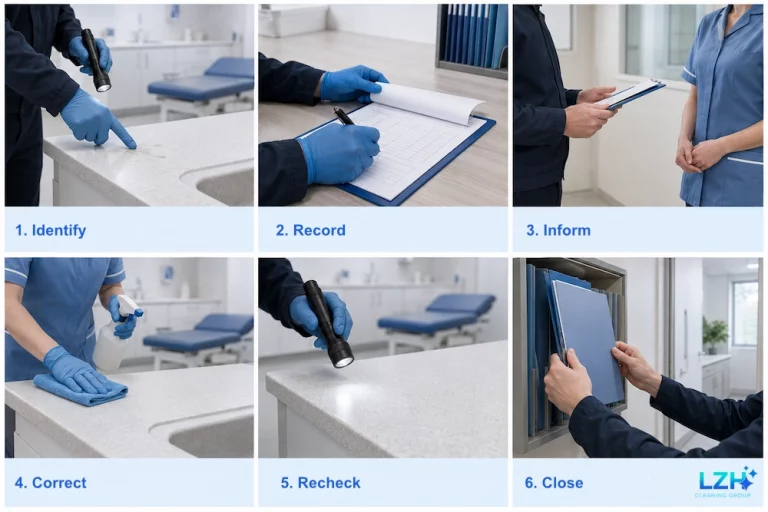
Healthcare managers do not need to become cleaning experts to notice poor documentation. Several warning signs are relatively easy to spot.
Consistency is good, but mechanical completion is not. If identical boxes are ticked in exactly the same way every day and exceptions never appear, managers should question whether the record is genuinely reflecting real site conditions.
A box labelled “clinical rooms” is only useful when everyone understands the tasks included within it. The cleaning scope, schedule, and record should align closely and function together as one system effectively.
If a form only allows “complete”, cleaners may feel pressured to tick a task even when access or another issue prevents completion. A clear option to record exceptions should always be included so the record reflects what actually happened.
A folder full of signed sheets can create the appearance of control while providing very little actual oversight. Someone should know who reviews the information, how often it is checked, and what happens when a problem appears.
If staff report problem from three days ago, cleaning entry should easily locate with tasks, cleaner, inspections, and exceptions If this information cannot be identified, the system provides only limited accountability.
A practical record review should sample different days and areas to confirm completion, frequency, exceptions, and site observations. Key questions to consider during review include:
The solution to weak documentation is not more forms that get ignored or rushed through. It is capturing the right information to verify responsibilities, cleaning frequency, completed tasks, exceptions, and follow-up actions.
Current NHS standards support flexibility within a structured framework, enabling adaptation while maintaining clear accountability across healthcare settings. Healthcare documentation should reflect real site risks and complexity not just larger unhelpful files simply.
LZH Cleaning Group provides tailored healthcare cleaning in Bedford clinics and practices with flexible schedules, quality-checked DBS-checked operatives. This includes structured cleaning plans, flexible scheduling, and quality checks delivered by DBS-checked and insured operatives.
The company prioritises clear communication, ensuring managers always have direct contact points when requirements change or issues arise. For healthcare managers, this provides transparency in agreements, ongoing work, and how issues are resolved effectively.
If your healthcare cleaning records are just signatures and tick boxes, it is time to reassess what they truly prove. LZH Cleaning Group can help you build a cleaning service with clear responsibilities, routines, and quality checks.