Your Healthcare Cleaning Records Might Be Proving Almost Nothing
Learn what healthcare cleaning records should include, how cleaning should be verified, and what managers should check to maintain clear accountability.

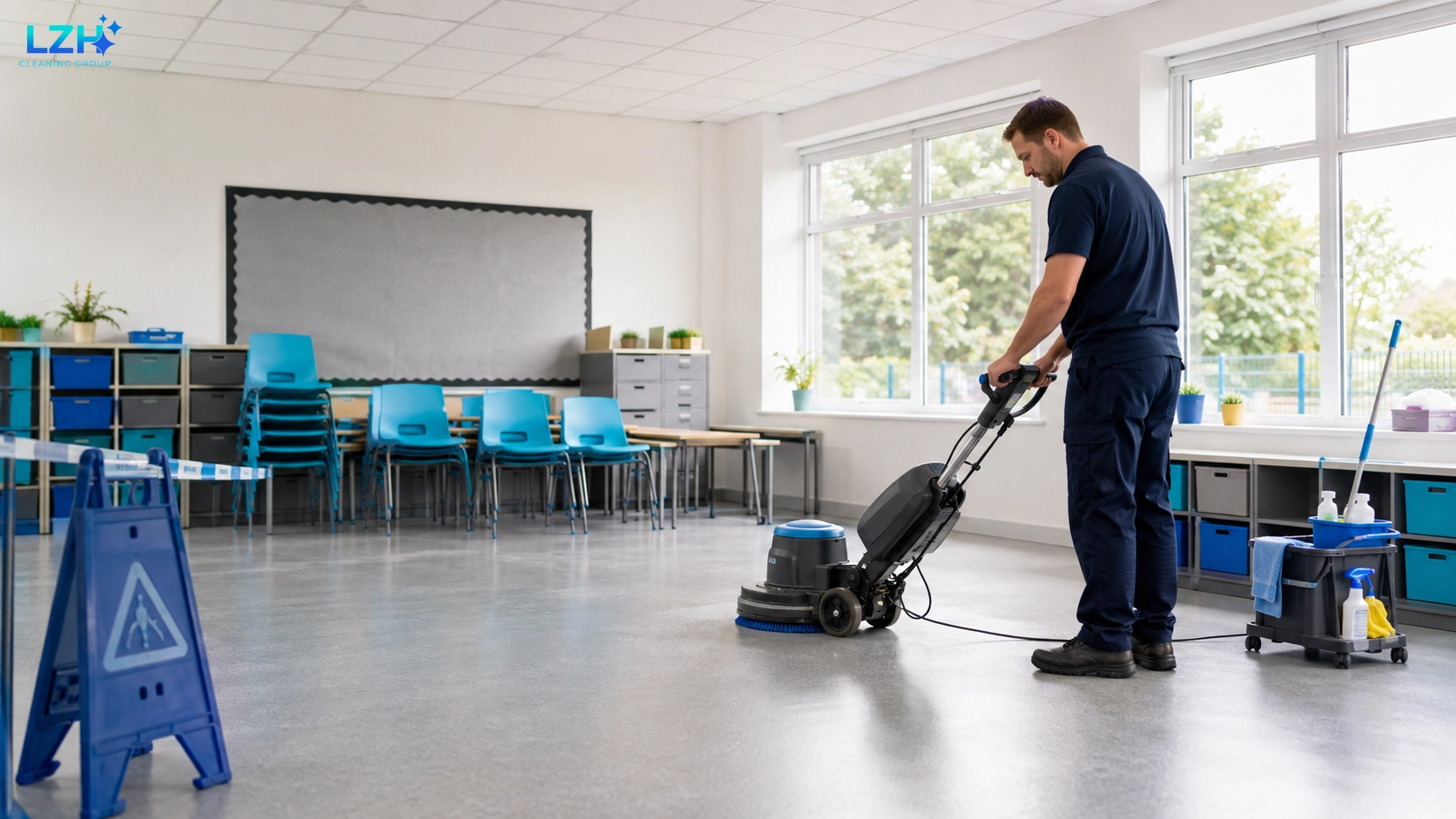
TL;DR School holidays give cleaning teams the time and access needed to tackle areas that routine term-time cleaning cannot always reach. A well-planned deep clean should focus on hidden dirt, detailed floor care, washrooms, high-touch surfaces, storage spaces, staff areas and periodic tasks while allowing enough time for specialist work and drying before the school reopens.
Key Takeaways
A school may look clean at term end while hidden dust and grime remain in areas blocked by furniture, equipment, people and limited access. This is why some tasks are better suited to an empty building rather than a sign that routine cleaning has fallen short.
A useful school deep cleaning checklist should therefore go beyond repeating the usual routine more thoroughly. It should identify overlooked areas, include periodic cleaning tasks and set out a clear scope for the work to be completed before pupils and staff return.
Routine cleaning maintains frequently used areas such as floors, bins, washrooms, desks, touchpoints, and communal spaces. Holiday deep cleaning allows cleaners to move furniture, reach hidden edges, treat floors, clean high surfaces and access occupied rooms.
UK Health Security Agency guidance recommends defining what needs cleaning, how often tasks should be completed and who is responsible. A clear schedule should cover daily, weekly and periodic tasks so the holiday deep clean adds value rather than repeating the usual routine.
The easiest areas to miss are often the ones nobody can reach properly when a classroom is full.
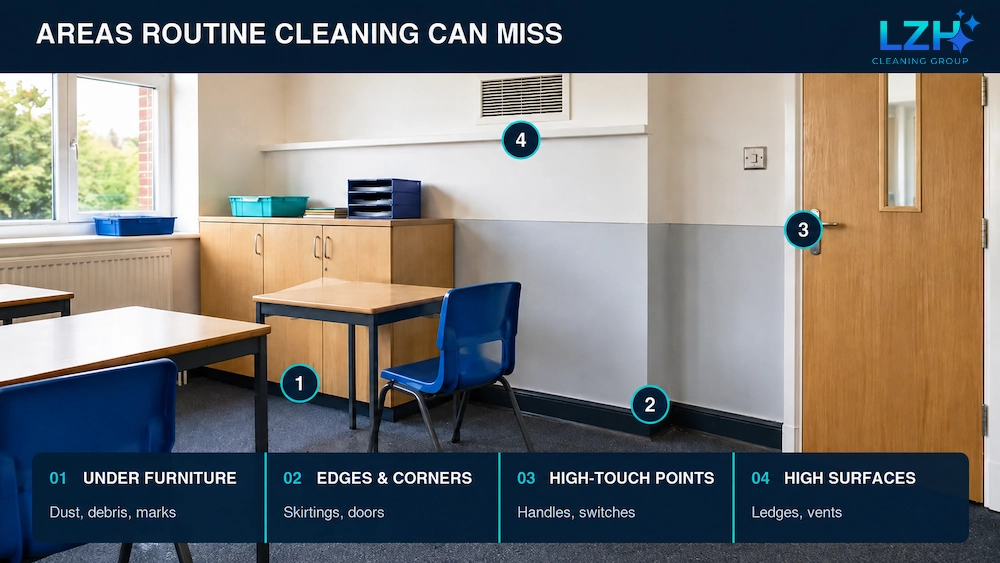
Desks, tables, chairs and mobile storage often conceal dust, paper, food debris and marks along surrounding floor edges. During closure periods, rooms can be safely rearranged, allowing cleaners to reach and thoroughly clean previously hidden areas.
Skirting boards and floor edges rarely look urgent from the doorway, yet dust and grime collect around them over time. Holiday periods are a sensible time to work around room perimeters, behind doors and into corners that are easy to miss during shorter visits.
A classroom deep clean should follow how the room is actually used, not simply how it appears on a floor plan.
Door handles, push plates, switches, cupboard handles, chair backs and frequently handled equipment deserve deliberate attention. UKHSA guidance specifically highlights frequently touched surfaces such as door handles, toilet flushes, taps and communal touch areas.
Open shelves, window ledges, and storage surfaces can gather fine dust even in classrooms that are cleaned regularly. During holidays, teaching materials can be moved or consolidated, allowing cleaners better access to shelves, ledges and storage surfaces.
School washrooms experience heavy, repeated use, so they need more than a quick pass on a general cleaning list. During holidays, cleaners can thoroughly clean washrooms while checking dispensers, sealants, fittings, floor edges, odours and hard-to-reach areas.
Cleaning products and methods should always match the surface and task. Where disinfection is required, follow the manufacturer’s instructions and the school’s infection-control procedures. Using stronger chemicals does not necessarily produce better results.
Floors are one of the clearest reasons to schedule deeper work during school holidays.
Corridors, entrances and dining spaces can build up soil that routine mopping does not fully remove. Depending on the flooring, periodic machine cleaning or another suitable treatment may be appropriate.
HSE guidance stresses using a cleaning method that suits the floor type and controlling access while floors are wet or drying. During closure periods, fewer people move through the building, making floor-specific cleaning and access control easier to manage.
Vacuuming is essential for routine maintenance, but it does not replace periodic deeper carpet cleaning. Vacuuming is essential for routine maintenance, but it does not replace periodic deeper carpet cleaning. Holidays allow time for extraction and adequate drying before rooms reopen.
Routine cleaning usually focuses on surfaces within easy reach, leaving higher areas overlooked during regular cleaning visits. Tops of cupboards, high ledges, accessible vents and grilles, door tops and other elevated surfaces can therefore collect dust over time.
A holiday clean is a good opportunity to review these areas where safe access is possible. High-level work should be properly assessed and completed with suitable equipment. If specialist access is required, the task should be identified separately rather than improvised.
Pupil-facing areas often receive most of the attention, but staff rooms, offices, reception spaces and meeting rooms also collect dust and grime. These spaces should be included in any thorough school deep cleaning checklist:
School kitchens, dining areas, and food preparation spaces need separate plans for hygiene, equipment and responsibilities. UKHSA guidance stresses thorough cleaning, disinfection and compliance with Food Standards Agency hygiene standards in food preparation areas.
Before the holiday clean begins, confirm which kitchen tasks are included, who is responsible and whether specialist cleaning is required. This helps prevent confusion about appliances, surfaces, or duties that fall outside the general cleaning service.
Stock rooms, sports storage, stationery cupboards and equipment rooms are easy to overlook because they are rarely public-facing. During a closure period, accessible shelves, floors and frequently handled surfaces can be cleaned more thoroughly.
It is also a good time for school staff to remove obsolete items and clear blocked areas. Cleaners cannot properly clean shelves or floors that remain covered or inaccessible.
A deep clean can reveal issues that are not cleaning problems, such as damaged flooring, water staining, deteriorated sealant, loose fittings, broken dispensers or persistent odours. These should be recorded and passed to the person responsible for maintenance.
Identifying problems during a school closure allows time for repairs or further investigation before pupils return.
One of the most useful ways to organise a school deep cleaning checklist is by frequency.
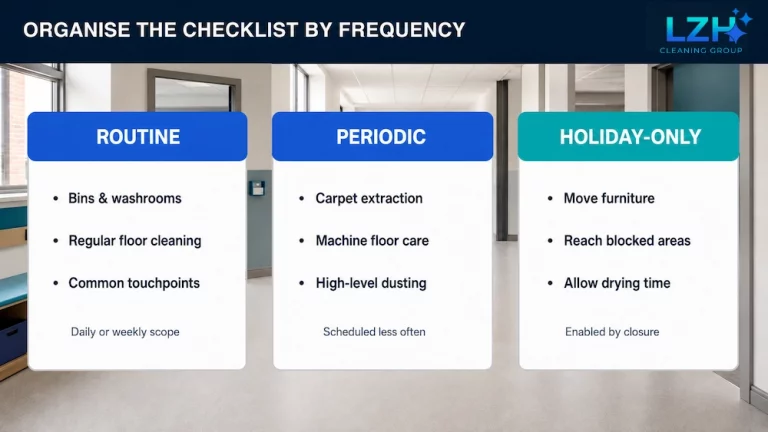
These are jobs already covered daily or weekly, such as bins, washrooms, regular floor cleaning and common touchpoints. They still matter, but they should not make up the entire holiday scope.
These can include deeper carpet cleaning, machine floor care, detailed washroom cleaning, high-level dust removal, and other tasks scheduled less frequently.
These are jobs made easier by an empty building, such as moving furniture, reaching blocked edges, accessing storage areas, or allowing floors and carpets enough time to dry.
Before closure, agree with rooms, movable furniture, specialist floors, restricted areas, access arrangements, alarms, site instructions and keyholders. Facilities managers should confirm rooms, access arrangements, alarms, site instructions, keyholders and responsibilities before closure.
Agree how the completed work will be checked through a room-by-room scope, task schedule or sign-off process. If decorators, maintenance teams or contractors are working on site, schedule the final clean after dust-producing work wherever practical.
We provide school cleaning as part of its commercial cleaning services, with plans built around each site, schedule and set of priorities. We provide school cleaning tailored to each site, schedule and priority, including deep cleaning, maintenance cleaning, and final polishing.
For holiday work, begin by identifying routine tasks and those requiring empty classrooms, shared spaces, additional access, or more time. From there, priority rooms, access windows, and periodic tasks can be agreed before work begins.
School holidays offer something cleaning teams rarely get during term time: time and access. Used well, that window can help reset classrooms, washrooms, staff areas, floors and overlooked spaces before the next term begins.