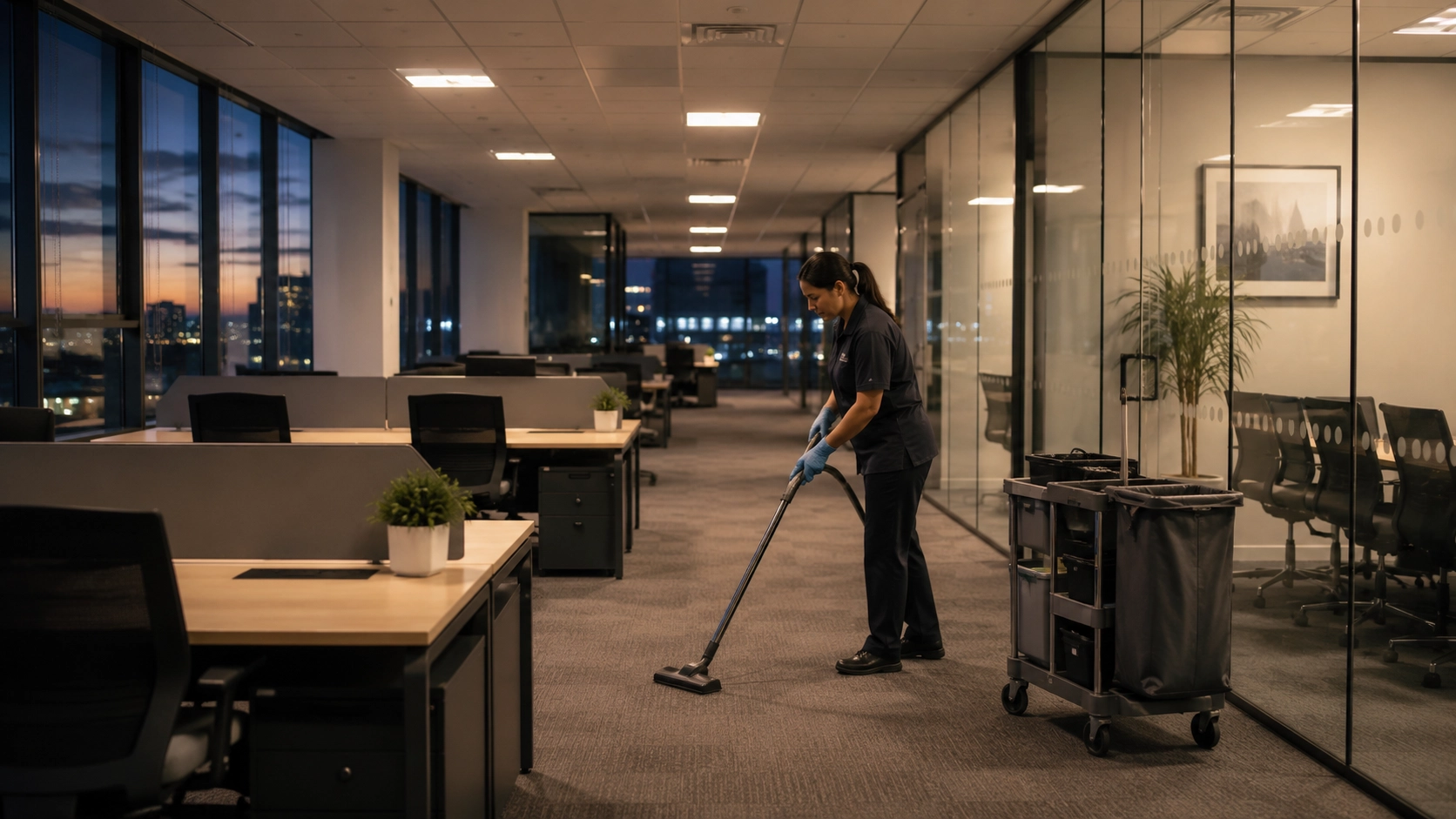
How to Arrange Warehouse Cleaning Around Shift Changes
TL; DR: The best cleaning window is a confirmed period when a specific warehouse zone can be kept clear of people, vehicles and stock movement long enough for cleaning and…

TL;DR: When a room in an HMO changes hands, the shared spaces need more than a quick tidy, even if other residents are staying. Check what the departing resident has left behind, clean the areas the new resident will use, and deal with maintenance issues before move-in.
Key takeaways
In a house in multiple occupation (HMO), a move-out rarely leaves the property empty. One person packs up while others still cook, shower, work and come and go as usual.
That makes a communal-area reset different from a whole-property end-of-tenancy clean. The aim is to make shared facilities ready for the next resident without throwing away anyone else’s belongings or interrupting the people who remain.
Before booking a cleaner, check the shared spaces the departing resident used, from fridge shelves and cupboards to bathroom storage and the hallway. Compare what you find with the inventory or handover notes, and ask current residents before treating unlabelled items as rubbish.
If anything has been left behind, record it and contact the former resident about collection under your usual procedure. Take dated photos of areas needing attention, and flag repairs separately: a sticky cupboard needs cleaning; a broken hinge needs fixing.
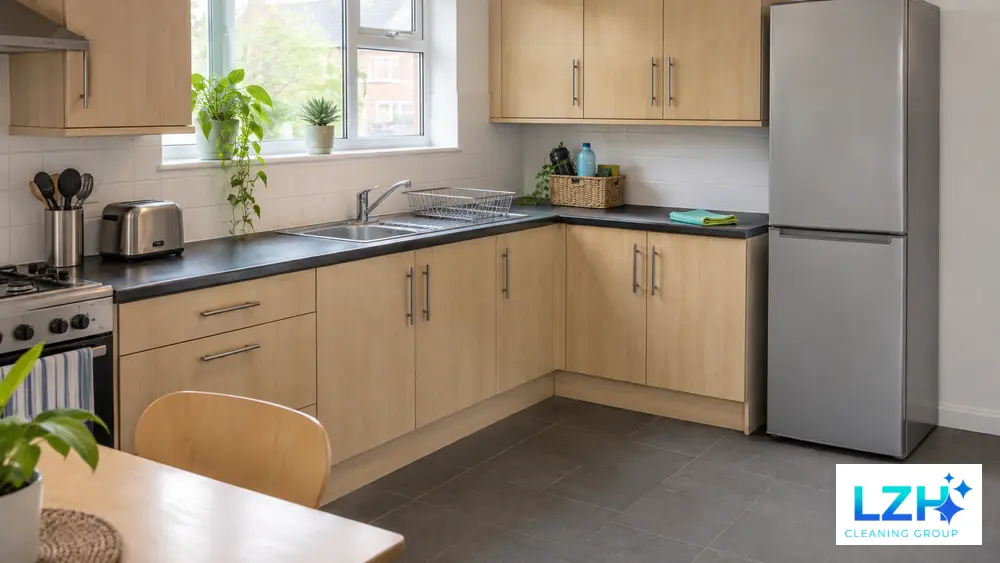
The kitchen usually needs the most careful handover because storage is divided between residents, but cooking surfaces are used by everyone. Clear the outgoing resident’s assigned cupboard and shelf once ownership has been confirmed, then wipe the empty space before it is allocated again.
Clean the toilet, basin, taps, shower or bath, mirrors and accessible tiles, removing soap residue and limescale. Check who owns toiletries before moving them, then empty the bin and replace any manager-provided supplies.
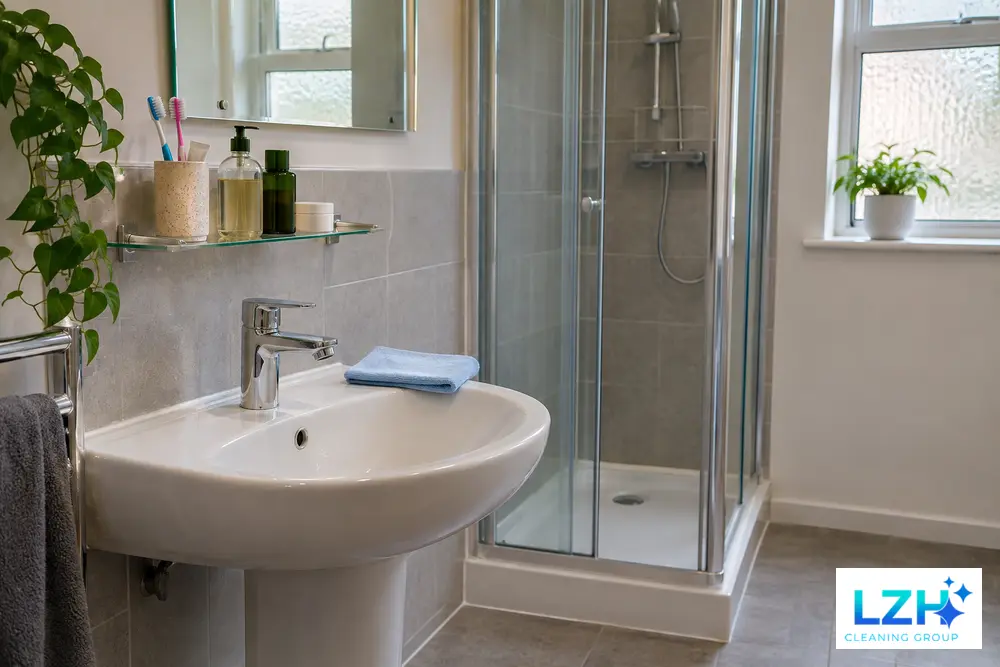
Report slow drains, leaks, loose fittings and recurring mould separately from cleaning. Check the extractor too, as wiping condensation alone will not fix poor ventilation.
A standard turnover reset should cover the surfaces and storage affected by the departing resident. However, the walkthrough may reveal wider buildup that needs more time than a routine communal clean.
Grease across cabinet fronts, thick limescale, stained grout, persistent odours or debris behind appliances can indicate that the whole shared area needs deeper attention. Check beneath movable furniture and appliances where practical, as dirt often collects outside the usual cleaning route.
If a smell or stain returns soon after cleaning, record where it appears and look for the cause. Damp, poor ventilation, plumbing faults or spoiled material hidden behind a fitting may require maintenance before the area can stay clean.
Flag jobs such as carpet extraction, upholstery cleaning, mould treatment, pest control or bulky waste removal during the first walk-through. Book any specialist help before the new resident needs the space.
Fix leaks, faulty extractors or pest problems at the source instead of cleaning over them. Let current residents know when shared facilities will be out of use, then check the work and note anything still outstanding.
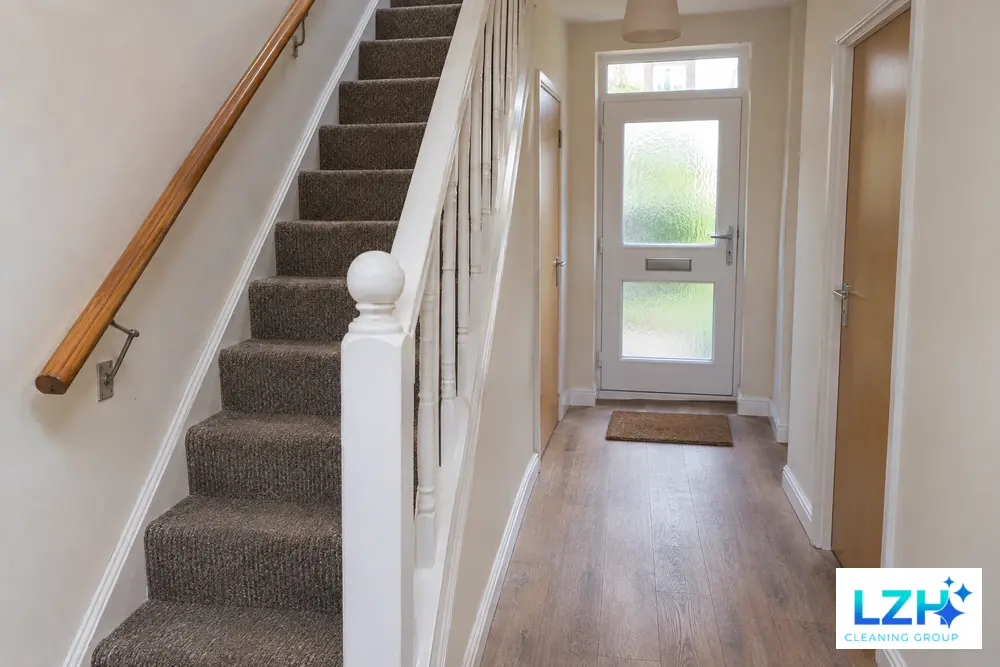
A new resident will notice the entrance first, so sweep or vacuum the stairs and hallways, then wipe handrails, door handles and dusty ledges. Check that mats lie flat and communal lights work, and flag any repairs or electrical faults to maintenance.
Give the shared lounge, laundry and outdoor access a quick once-over too. Wipe shared surfaces, remove rubbish once you’re sure it can go, and note any problems with appliances, doors or gates before handover.
Move-outs often leave more boxes and bulky items than the bins can take. Arrange collection before the new resident arrives, then check the bin store, paths and shared outdoor areas for spills or anything left behind.
Shared areas should be clean and in good order at handover. Walk through them once the cleaning is complete to catch missed surfaces, blocked access or waste left behind.
An end-of-tenancy walkthrough should produce two lists: what needs cleaning and what needs fixing. That distinction prevents a contractor from being asked to make a damaged surface look presentable when it needs repair or replacement.
Watch for loose stair coverings, damaged handrails, broken lights, windows that will not open, leaking taps and faulty shared appliances. The HMO management regulations in England require managers to keep common parts in good and clean decorative repair, in safe working condition and reasonably clear of obstructions.
Agree which shared areas and the departing resident’s storage need cleaning, identify belongings that must stay, and confirm extras such as oven cleaning, carpet treatment or bulky waste removal. Tell remaining residents when the cleaner will visit and which facilities may be briefly unavailable.
Remove agreed rubbish, clean the shared areas and allow surfaces to dry before final checks. Before move-in, check the new resident’s cupboard and fridge space, bathroom, bins and route to their room, then record unfinished tasks and repairs.
A turnover clean welcomes the next resident, but shared spaces need regular attention after move-in. Agree who handles day-to-day tidying and when the kitchen, bathrooms, halls and bins will be cleaned.
If residents rent separate rooms, council guidance may call for regular cleaning of communal areas, so check the tenancy agreements and local requirements. Put the schedule and occasional deeper tasks in writing so everyone knows what to expect.
We clean communal areas in HMOs and other shared properties for landlords, letting agents and property managers. We can tailor visits to the way your property is used and the routines of the people living there.
If a new resident is moving in, tell us when they arrive, which shared spaces need a refresh and whether you already have regular cleaning in place. We’ll agree on the work and give you a clear quote before the handover.
A clean kitchen, bathroom and entrance give the next resident a warm welcome and make shared spaces more comfortable for everyone already living there.
Contact LZH Cleaning Group to arrange a communal-area reset before move-in and discuss a regular cleaning schedule that fits your property.