TL; DR: The best cleaning window is a confirmed period when a specific warehouse zone can be kept clear of people, vehicles and stock movement long enough for cleaning and drying. Plan routine tasks, deeper work and spill response separately, then make each shift handover include a clear decision about which areas are ready to reopen.
Key Takeaways
- Map real traffic patterns before choosing a cleaning time; the shift change itself may be one of the busiest moments.
- Allocate cleaning by zone, with a named site contact who can close and reopen each area.
- Leave time for setup, drying, checks and unexpected delays, rather than filling the entire gap with cleaning.
- Keep a separate response for urgent spillages and hazards that cannot wait for the next planned visit.
A warehouse can look briefly quiet between shifts while drivers’ queue at the bays, the incoming team collects equipment, and the outgoing team finishes its last picks. Send cleaners into a main aisle at that moment, and a tidy schedule can turn into an avoidable interruption.
Arranging warehouse cleaning around shift changes starts with a simple question: when can each area actually be released? The answer will vary across the floor, staff facilities, dispatch lanes and loading bays, so a single start time rarely covers the whole building.
Start With the Real Shift Pattern
Write down when each shift is rostered to begin and end, then compare those times with what happens on site. Handover meetings, late collections, goods-in deliveries, battery changes and picking targets can all extend activity beyond the nominal shift boundary.
Walk the site with a supervisor and mark its pedestrian routes, lift-truck lanes and busy doors. Ask which operations can pause and which must run continuously.
Find the Gap, Not Just the Clock Time
Shift times alone do not show when an area is ready for cleaning. If one shift ends at 14:00 and the next starts then, the aisle may be busiest during the handover.
Ask the operations lead when each zone is genuinely clear, such as after the final collection or once the incoming team is at its workstations. Record the earliest safe access time and latest reopening time and choose another window if there is not enough time to clean and dry the area safely.
Divide the Warehouse into Workable Zones
Treat the warehouse as several cleaning areas rather than one large floor. Common zones include goods-in, dispatch, pick aisles, packing benches, pedestrian walkways, welfare rooms, and offices.
For each zone, note the tasks, frequency, person authorising access and route available during cleaning.
Match Tasks to Access Time
Match each task to the time and controls available:
- Short gaps: Empty bins, remove loose packaging, wipe shared touchpoints and clean small spots.
- Longer windows: Schedule machine scrubbing, detailed bay work and tasks that need drying time.
- Separate planning: Arrange high-level dusting or work near racking when access equipment or exclusion areas are required.
- Cleaning frequency: Give busy areas, such as dispatch thresholds, more attention than quiet corners.
Agree Who Can Release Each Area
Give the cleaning lead one named contact for each shift, usually a supervisor who can confirm when a route or work area is safe to close. Before cleaning starts, they should make sure the zone is clear, vehicle movements have stopped, and an alternative route is in place.
The cleaning lead should also confirm the task, timing, and hand-back points. Once the equipment and waste are removed and the floor is ready, the site contact can reopen the route and update the incoming team.
Put the Handover in Writing
Use a shared sheet or site log to record the zone, agreed cleaning window, person releasing it, tasks completed, any remaining hazards and confirmed reopening time. This gives both shifts a clear record of what was cleaned and whether the area is safe to use.
If a late delivery or operational delay cancels the window, record the reason and nominate a realistic replacement slot. Add any unfinished tasks to the handover so they are assigned rather than overlooked, preventing an incomplete clean from quietly becoming the next shift problem.

Protect Routes While Floors Are Being Cleaned
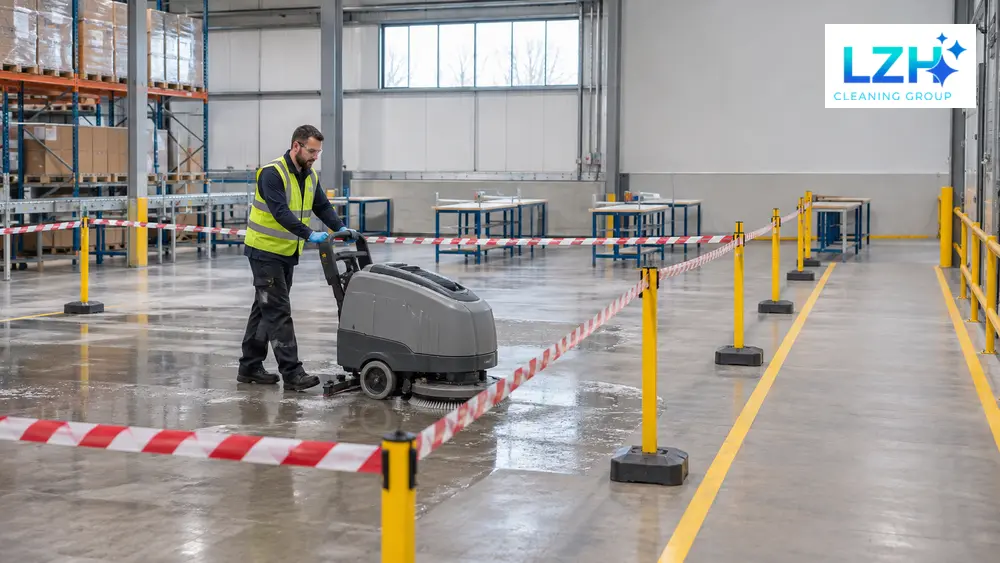
Choose cleaning methods that suit the floor and the available window, allowing enough time for setup, cleaning, drying, and inspection. A 30-minute gap rarely provides 30 minutes of usable cleaning time.
When a route must stay open, clean in smaller sections and provide a supervisor-approved alternative. Keep barriers, cables, equipment and waste clear of vehicle lanes, fire exits and the incoming shift route.
Separate Planned Cleaning from Spill Response
Some cleaning tasks cannot wait for the next scheduled visit. Water, oil, powder, damaged packaging or loose strapping on an active route should be reported and dealt with promptly under the site’s hazard and spill procedures.
Make sure staff know who to alert, who can isolate the area and who is responsible for the clean-up. The cleaning contract should also state what the team can handle, and when an unknown substance, damaged equipment or restricted area requires the site’s procedure or specialist support.
Give Cleaners the Site Information They Need
Before the schedule begins, brief the team on access, sign-in, traffic routes, PPE, fire procedures, restricted areas, storage and hazard reporting.
Confirm in the task list:
- Who may move stock, pallets or equipment
- Controls required around machinery or chemicals
- Who supplies materials and disposes of waste
- What happens if cleaning runs late
Agree on these responsibilities before adding higher-risk tasks to the cleaning scope.
Test the Timetable for One Working Week
Run the schedule for a week and ask cleaners and shift supervisors where access was delayed, which zones were missed, and whether floors reopened on time.
Check busy areas such as entrances, bays and walkways. If dirt returns too quickly or the incoming shift still finds routes blocked, adjust the frequency, cleaning window, zone plan or handover process.
An Example of a Practical Cleaning Plan
Imagine a warehouse with two daily shifts and a dispatch area that remains active through the afternoon changeover. A practical plan could be:
- Clean staff facilities before the new shift arrives.
- Clean a released packing zone after the outgoing shift finishes.
- Schedule the main dispatch floor for a separately approved low-traffic period.
The exact times would come from the site’s movement pattern and the time needed to dry the floor. The useful feature of this plan is that every area has its own access decision and reopening check.
Why Choose LZH Cleaning Group?
We offer warehouse cleaning for Bedford businesses, with options for one-off work and regular visits based on your site’s needs. We use personalised timetables that can fit around shift changes, loading activity and other busy periods, helping to reduce disruption while keeping priority areas maintained.
Share your shift pattern, busiest zones, recurring problem areas and any access or safety rules when requesting a quote. This gives us the details we need to discuss suitable cleaning windows, agree with a practical scope, and provide a tailored quote for your warehouse.
Ready to make cleaning fit your operation?
The right warehouse cleaning schedule leaves supervisors confident about who has access, what will be cleaned and when each route can safely reopen. It also gives the incoming shift a clean start without asking cleaners to work in the middle of moving traffic.
Contact LZH Cleaning Group or call 01234 637781 to discuss your shift times and arrange a quote for a warehouse cleaning plan built around your site.