Your School Deep Cleaning Checklist Is Probably Missing These Areas
Planning a school holiday deep clean? Use this school deep cleaning checklist to cover overlooked areas, floor care, washrooms, storage spaces and more.

TLDR: A first commercial cleaning visit runs more smoothly when access, priorities, and expectations are clear. Confirming the scope, securing sensitive items, notifying staff, and highlighting special requirements helps the cleaning team work efficiently and achieve better results.
Key Takeaways
Booking your first commercial cleaning visit helps create a cleaner, safer workplace. The first appointment helps the cleaning team understand your space and priorities for a more effective service.
You do not need to clean before the cleaners arrive, but a little preparation can make the visit run much more smoothly. Clear access and simple instructions help the team work efficiently from the start.
Before the cleaning team arrives, confirm exactly what will be cleaned, along with any site-specific hygiene, access, safety, or operational requirements. A clear scope outlining the areas, tasks, and type of clean helps prevent confusion and keeps the team working efficiently from the start.
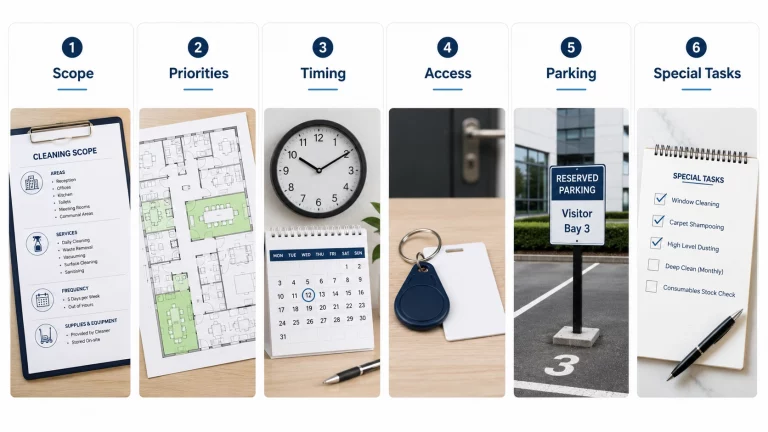
Confirm the key details before the appointment to ensure the first visit runs smoothly:
Confirming these details helps prevent misunderstandings and sets clear expectations from the start.
Every commercial space has priority areas, such as reception areas, washrooms, busy walkways, break rooms, and hygiene-sensitive spaces. Identifying them beforehand helps the cleaning team focus on what matters most.
Take a quick walk through the property and note any areas needing extra attention. A simple list of problem spots will help the cleaning team focus on what matters most.
Look at entrances, floors, glass, bins, toilets, kitchens, corridors, desks, touchpoints, and customer-facing areas for anything that looks dirty or overlooked. If it stands out to visitors, staff, tenants, parents, patients, or inspectors, add it to your priority list.
A first commercial cleaning visit can become awkward if staff do not know it is happening. Staff may leave confidential documents out, clutter workspaces, or unexpectedly occupy areas scheduled for cleaning.
A quick message can tell staff when cleaning is scheduled, which areas are included, and what they need to clear. This is particularly helpful in shared workplaces.
Ask staff to secure confidential documents, clear away food, and remove anything that could get in the way of cleaning. Let them know about any temporary access restrictions or remind them to leave workspaces ready if cleaning is scheduled after hours.
Professional cleaners are there to clean, not organise belongings or sort through items. If desks, counters, tables, and shared surfaces are cluttered, cleaners may only be able to clean around items rather than clean the surfaces properly.
This does not mean every surface must be empty, but cleaners need enough access to clean properly. Clearing unnecessary items from desks, meeting tables, and kitchen counters helps cleaners work more thoroughly and efficiently.
Before the appointment, ask staff to put away paperwork, personal items, and clear obvious rubbish. Taking a few minutes to do this helps cleaners work more efficiently and achieve better results.
Floors are a key part of commercial cleaning, but blocked walkways make cleaning harder. Removing boxes, cables, bags, stock, chairs, tools, and other obstacles helps cleaners work efficiently and safely.
This matters even more in busy sites such as workplaces and shared buildings. Cleaners need safe routes through the building, especially if they are carrying equipment, using wet floor signs, moving between rooms, or cleaning after hours.
Clear walkways, entrances, corridors, stairwells, kitchens, washrooms, and other cleaning areas so the team can work safely and efficiently. If something cannot be moved, let the cleaners know in advance.
Trust matters when hiring a commercial cleaning provider, but good preparation still includes protecting sensitive items. This is especially important in workplaces that handle confidential staff, client, financial, legal, or medical information.
Before the first commercial cleaning visit, secure confidential documents, access credentials, cash, devices, and personal belongings. Cleaners should not be expected to decide what is private or valuable.
Store sensitive documents and valuables in secure storage before the cleaning team arrives. If certain rooms should not be accessed, clearly label or lock them to help protect your business, staff, clients, and cleaners.
Access issues are one of the easiest ways to delay a first visit. If cleaners cannot enter the building, access key areas, or reach the right of contact, the appointment may be delayed before any cleaning begins.
Before the first visit, confirm who will meet the team or how they will enter the building. If the clean is happening outside working hours, make sure keys, codes, fobs, alarm instructions, and locking-up procedures are agreed in advance.
Provide the cleaning team with all necessary access details beforehand to avoid delays and ensure they can reach every agreed area without issues, including:
Every site has its own requirements that may not be obvious during a first visit. Certain floors, surfaces, equipment, or rooms may need specific cleaning methods or extra care.
Before work begins, tell the cleaning team about any safety rules, restricted areas, or sensitive spaces. Sharing this information early helps protect your property, keeps the team safe, and reduces unnecessary disruptions.
Flag any areas needing special care, such as server rooms, medical spaces, machinery, fragile fixtures, or chemical storage. Share any cleaning restrictions, approved products, or required procedures before work begins.
The first clean helps identify any areas that need attention or adjustment. A brief review after the appointment helps ensure future visits run more smoothly and consistently.
A quick walk through with the main contact is usually enough to review the first clean. Check priority areas, note anything missed due to access issues, and confirm the timing worked for your site.
Ask whether the cleaners had everything they needed and whether any areas took longer than expected. Use the review to confirm the schedule and task list still fit your building and make any needed adjustments.
Many businesses worry their workplace is too messy before the first cleaning appointment. In reality, there is no need to deep clean, scrub washrooms, mop floors, or dust every surface before the cleaners arrive.
Your role is simply to make the space safe, accessible, and clear enough for the cleaning team to work efficiently. The cleaning team will handle the rest and advise if any areas need extra attention.
Before the appointment, run through this final checklist:
For businesses in Bedford and nearby areas, LZH Cleaning Group provides tailored commercial cleaning services designed around each site’s needs. The team cleans offices, warehouses, schools, healthcare settings, communal areas, building sites, and other commercial premises.
LZH Cleaning Group helps clients define the cleaning scope, identify priorities, and create a schedule that suits their site. Whether it is a one-off deep clean or the start of regular cleaning, the focus is on clear communication, reliable standards, and cleaner spaces.
Your first commercial cleaning visit should feel organised, not stressful. With a little preparation and the right cleaning team, your workplace can be cleaned more efficiently from day one.