Your School Deep Cleaning Checklist Is Probably Missing These Areas
Planning a school holiday deep clean? Use this school deep cleaning checklist to cover overlooked areas, floor care, washrooms, storage spaces and more.

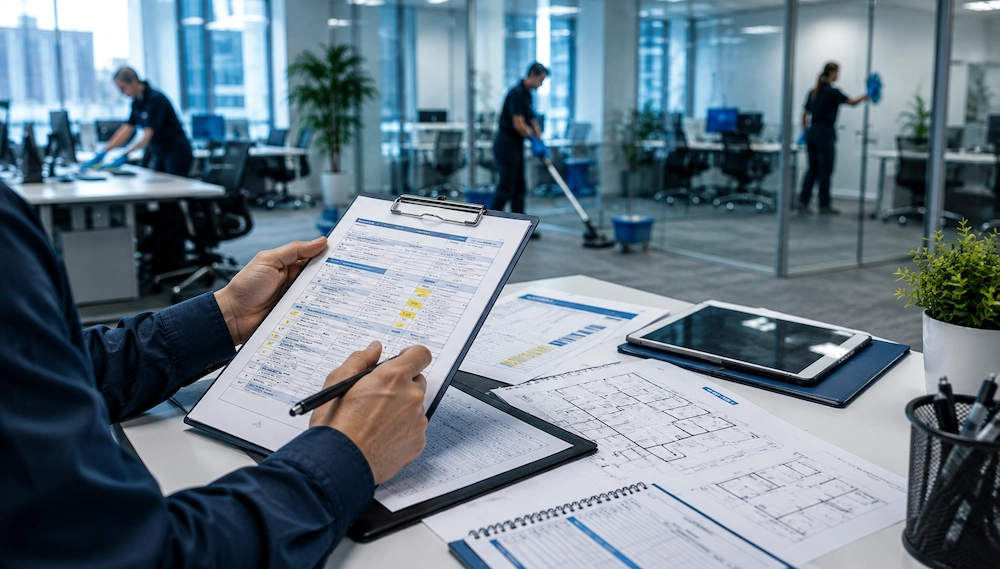
TL;DR: A commercial cleaning scope of work should clearly define the areas to be cleaned, the tasks to be completed, how often they will be carried out, and the standards expected. It should also cover responsibilities, access requirements, supplies, quality control measures, and any services that fall outside the standard agreement.
Key Takeaways:
A clean workplace should never rely on assumptions, yet many businesses hire cleaning providers without clearly defining what is included in the service. This often leads to confusion, such as expecting certain tasks to be included when they are not.
A commercial cleaning scope of work removes the guesswork by clearly defining what will be cleaned, how often, and how standards will be maintained. For commercial premises, a clear scope helps maintain hygiene, safety, and professional standards.
A common mistake is treating a cleaning scope as just a checklist. Tasks like vacuuming floors, emptying bins, and cleaning toilets may seem straightforward, but without clear expectations, quality and consistency can be difficult to measure.
A proper scope should define what “clean” means for your workplace, as cleaning needs vary by environment. It should also identify priorities, such as high-touch surfaces, busy floors, or customer-facing areas like receptions and washrooms.
Before listing tasks, the scope should clearly identify all areas included in the service to avoid misunderstandings.
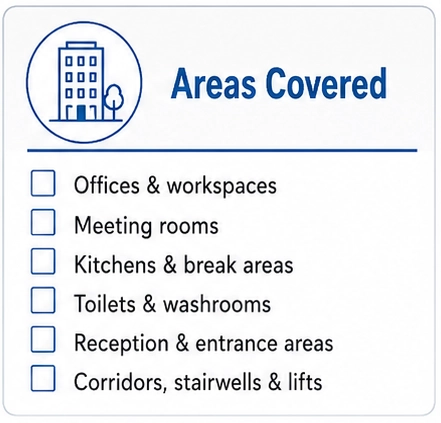
A strong scope should clearly identify all areas to be cleaned, including offices, kitchens, washrooms, corridors, entrances, and communal spaces. For larger sites, it may need to separate zones by floor, department, building, or access level.
This helps avoid missed spaces. For example, a cleaner may cover the main office every visit but not enter a locked meeting room unless the scope says it should be included. A warehouse may have facilities that each need a different method and frequency.
Some areas get missed because they are not obvious during a walk-through. Store cupboards, internal windows, skirting boards, door frames, high shelves, handrails, lift buttons, shared appliances, bin storage areas, and entrance mats can all affect the overall standard of the premises.
These small details are often the difference between a place that looks “quickly cleaned” and one that feels properly maintained. They should not be left to chance.
Once the areas are defined, the scope should list the routine tasks for each space to create clear, measurable cleaning standards.
For offices and workstations, a commercial cleaning scope typically includes vacuuming, dusting, bin emptying, surface wiping, and cleaning shared equipment where permitted. It may also cover internal glass cleaning, removing visible marks, and keeping meeting rooms tidy and presentable.
It should also outline any limitations, as many cleaners will not move personal belongings, paperwork, laptops, or confidential documents unless this has been agreed in advance. This is not a sign of poor service but a practical way to maintain confidentiality.
Washrooms usually require more detailed cleaning specifications because hygiene standards are higher. The scope should clearly state what will be cleaned and whether consumables such as toilet roll, paper towels, hand soap, and bin liners are included and restocked.
Kitchens and staff areas should also be included, covering surfaces, appliances, floors, bins, and other shared touchpoints. The scope should clarify whether tasks such as dishwashing, fridge cleaning, kettle descaling, and appliance deep cleaning are included, as these are often separate services.
A list of tasks is only half useful without frequency. Emptying bins once a week may be fine in a small meeting room, but not in a busy kitchen. Mopping a quiet office corridor once a week may work, while a school entrance or restaurant floor may need daily attention.
The best cleaning schedules are based on how the building is used, including foot traffic, visitors, customers, and regular occupants. They should also reflect the environment, including food areas, healthcare settings, and construction activity.
A good scope should clearly divide tasks by frequency, such as:
Some businesses experience periods that require extra cleaning support, such as school holidays, busy restaurant seasons, construction milestones, or workplace events. Because of this, the scope should allow for flexibility, as a cleaning plan that cannot adapt can quickly become outdated and less effective.
A strong cleaning scope should clearly outline not only what is included but also what falls outside the standard service. This helps prevent misunderstandings and ensures both the business and the cleaning provider have the same expectations from the start.
Services such as deep cleaning, specialist cleaning, exterior cleaning, and restoration services often require additional equipment, training, or pricing. Listing them separately helps set clear expectations, avoid surprises, and ensure accurate budgeting.
A cleaning scope should clearly state who is responsible for providing products, equipment, and consumables.
The scope should say whether the cleaning provider brings vacuums, mops, cloths, chemicals, floor machines, warning signs, and other tools. It should also note any special requirements, such as fragrance-free products, colour-coded materials, or approved chemicals for sensitive areas.
If the business has its own preferred products, this should be written into the scope. If certain surfaces need special care, such as natural stone, stainless steel, glass partitions, wooden floors, or specialist flooring, the provider should know before the service begins.
Consumables can easily cause confusion, so the scope should clearly state whether items like hand soap, toilet roll, bin liners, and paper towels are included and who is responsible for restocking them. This helps prevent misunderstandings and complaints.
A commercial cleaner often works before opening, after closing, or while staff are busy, which makes access and security an important part of the service. The cleaning scope should clearly cover access procedures, logistics, and the steps to follow if cleaners cannot enter the premises.
Some environments require extra considerations such as safeguarding, privacy, visitor procedures, or working around vulnerable people. Including these in the cleaning scope helps prevent misunderstandings and ensures smooth service delivery.
Good cleaning helps keep workplaces safe and compliant by reducing risks from wet floors, chemicals, waste, equipment, and trip hazards. A commercial cleaning scope should clearly outline the safety procedures cleaners must follow.
For workplaces where hygiene is critical, the scope should clearly define stricter cleaning requirements for areas such as hygiene-sensitive areas and explain how potential risks such as spills, broken glass, or sharps will be handled.
Without quality checks, cleaning standards can become inconsistent, with some people seeing a clean space while others notice missed details such as dust, fingerprints, or overflowing bins.
Quality checks should focus on key areas such as washrooms, floors, kitchens, touchpoints, bins, reception areas, stock levels, odours, visible dust, and recurring issues, with a clear process for resolving problems quickly.
A cleaning scope should not be treated as permanent because workplaces change over time. Setting regular review dates allows both parties to adjust the plan and helps ensure the cleaning schedule continues to match the building’s needs.
Even the best cleaning plan needs clear communication. The scope should identify the main contact, reporting process, and how urgent requests, schedule changes, and additional work will be handled.
Clear communication helps prevent misunderstandings and ensures issues such as maintenance concerns, extra cleaning requests, or supply shortages are resolved quickly before they affect the workplace.
A strong commercial cleaning scope of work should clearly outline the key details of the service, including:
LZH Cleaning Group provides commercial cleaning services for businesses across Bedford, supporting offices, warehouses, schools, healthcare facilities, restaurants, communal spaces, and construction sites. The team creates tailored cleaning plans to suit each site’s needs.
This approach helps businesses define a clear commercial cleaning scope of work from the start. With tailored quotes, flexible scheduling, trained staff, and quality checks, clients know exactly what is included and can maintain consistent standards.
LZH Cleaning Group can help you create a commercial cleaning scope that matches the way your premises are used, not just a generic list of tasks. Whether you need regular cleaning or a one-off deep clean, the team can assess your requirements and provide a tailored quote.