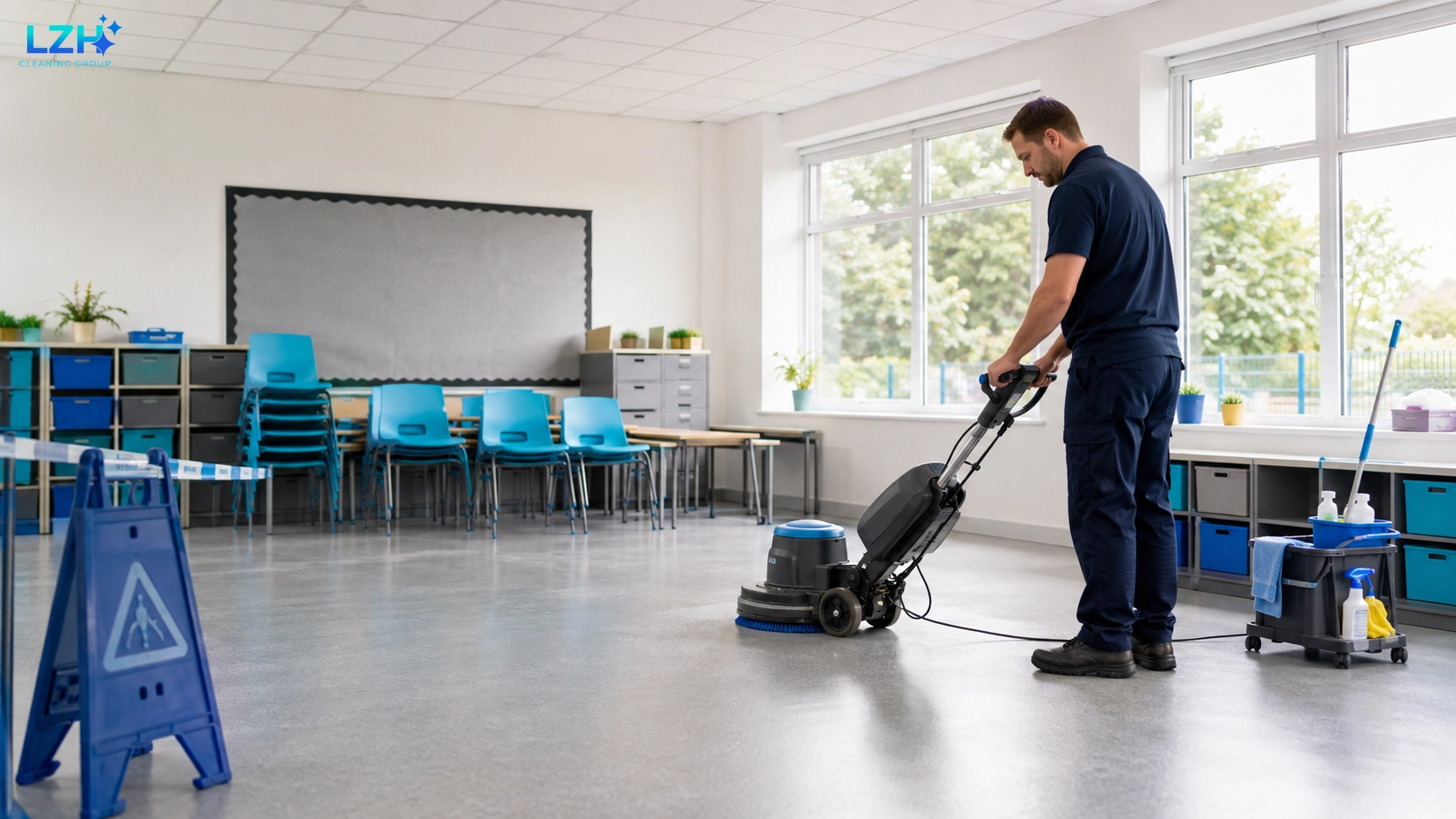
Your School Deep Cleaning Checklist Is Probably Missing These Areas
Planning a school holiday deep clean? Use this school deep cleaning checklist to cover overlooked areas, floor care, washrooms, storage spaces and more.

TL;DR: Event waste is easier to manage when bins, recycling points and cleaning checks are planned before guests arrive. A clear system helps prevent mess, protects the guest experience and makes the post-event reset far smoother.
Key Takeaways
A well-run event feels easy from the guest’s point of view. People arrive, find their way around, enjoy the space and leave with a positive impression. Behind that smooth experience sits a lot of careful planning, and waste management is one of the areas that can quickly affect how professional the whole occasion feels.
Overflowing bins, sticky floors, littered tables, blocked walkways and untidy washrooms can change the atmosphere fast. Even with great catering, entertainment and venue styling, visible mess makes a space feel poorly managed. It can also create slip hazards, unpleasant smells, pest concerns and a much harder clear-down once the room empties.
Before deciding how many bins you need or where cleaning support should be placed, look closely at the type of event you are running. A seated awards dinner will produce waste in a different way from a festival, trade show, wedding reception, school celebration or corporate launch.
Start by checking:
Waste builds fastest where people pause, queue, eat, drink or gather. Planning around those habits makes the space easier to manage and helps the cleaning team focus on the areas that need the most attention.
Bin placement is one of the simplest ways to prevent mess, yet it is often left until the last minute. Most people will use a bin when it is visible, nearby and clearly labelled. When they have to search for one, rubbish often ends up on tables, window ledges, floors or outside entrances.
Place bin stations near food and drink areas, main entrances and exits, seating zones, outdoor gathering points, smoking areas and toilets where suitable. In larger venues, think about the route guests will take rather than treating each room separately. Disposal points work best in natural stopping places, especially where people finish eating, queue for drinks or move between activities.
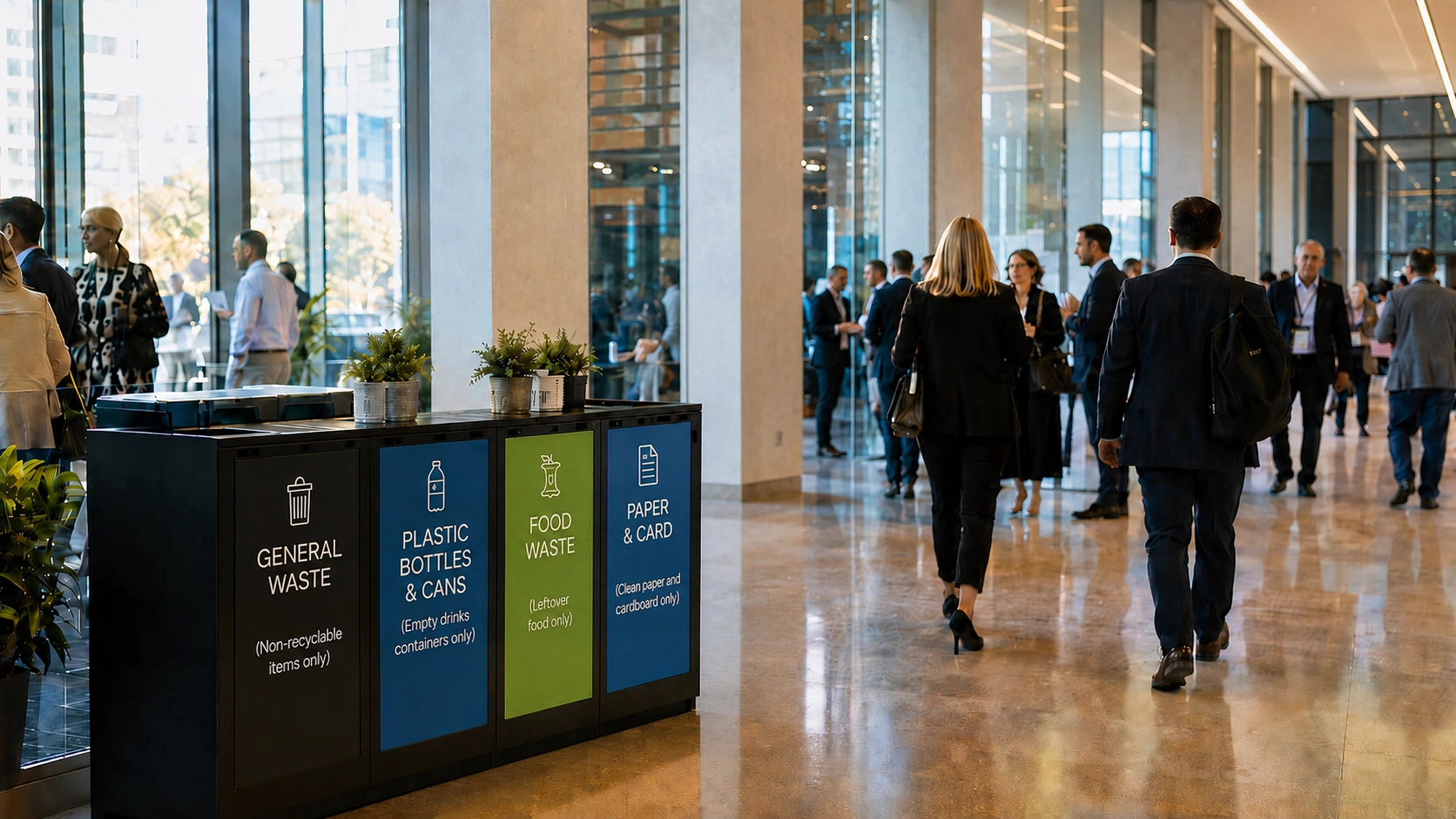
Recycling works best when the choice is obvious. At busy events, people make quick decisions, often while carrying plates, drinks, bags or coats. If the signs are unclear, too small or too wordy, recyclable items can end up mixed with food waste, liquids, napkins, cups and general rubbish.
Plain labels are usually the most effective. “Empty cans and plastic bottles” gives clearer guidance than a vague “recycling” sign. Back-of-house teams need the same level of clarity, particularly caterers, vendors and bar staff who may be handling larger volumes of packaging, glass or food waste.
An overflowing bin gives the wrong impression straight away. Once rubbish starts piling up, nearby tables, ledges and floors often become unofficial dumping areas too. That creates more work for the team and makes recycling harder to separate later.
Build bin checks into the cleaning schedule instead of waiting for bins to look full. High-traffic areas such as bars, food stations, entrances and washrooms may need more frequent attention than quieter corners of the venue. Liners should be changed before waste reaches the rim, and the area around each station should be wiped and cleared at the same time.
During a live event, cleaning needs to be discreet, steady and well-timed. The focus should stay on the areas guests notice most, including tables, bar tops, buffet stations, entrance mats, walkways, washroom sinks, door handles and visible floor spills. Empty cups, napkins and food scraps should be cleared before they build up, while sticky patches near bars and drinks stations need quick attention.
Timing also matters. Cleaning should stay minimal during speeches, performances or formal moments, then become more active during breaks, room changes, and quieter periods. For multi-room events, the cleaning schedule should follow the programme so the team is ready when footfall moves from one space to another.
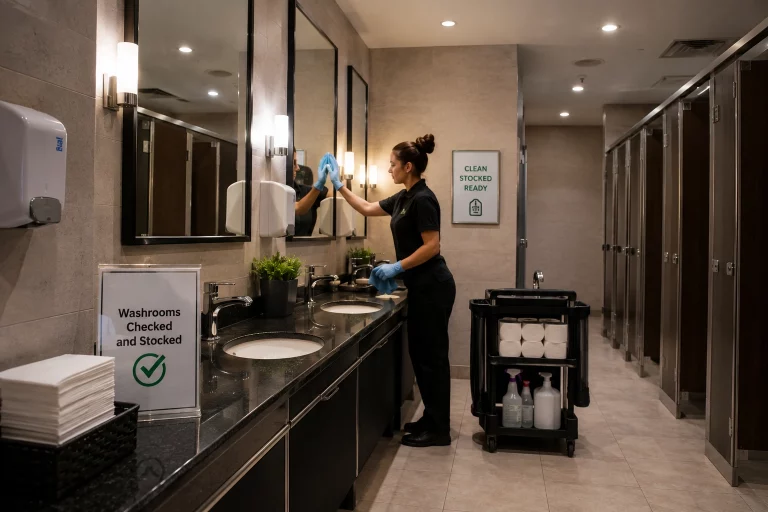
Washrooms have a direct impact on the guest experience. If toilet roll, soap or paper towels run out, or floors become wet and bins overflow, people notice quickly and the venue can start to feel poorly managed.
Before the event, washrooms should be cleaned, stocked and ready for quick restocking. During the event, regular checks should cover floors, sinks, mirrors, consumables, sanitary bins, general waste bins, odour control and high-touch surfaces, especially during busy periods.
Food and drink create some of the messiest waste on site, from leftover food and half-full cups to broken glass, greasy packaging and liquid spills. Caterers and bar teams should know exactly where to place food waste, cardboard, glass, cans, bottles and used disposables, while reusable cups, crockery or trays need clear return points.
Outdoor areas also need regular attention, especially in bad weather or windy conditions. Rain can be walked through entrances, litter can move across courtyards and smoking areas can become untidy quickly, so keep spill kits near bars, buffet points, entrances and dance floors for fast clean-ups.
A smooth post-event clean starts before the first guest arrives. Agree how the venue should be handed back, which areas need priority attention and how quickly the reset must be completed. This matters even more when a venue has another booking the same day or early the next morning.
A practical post-event reset usually follows this order:
Floors often need the most care after food, drink and heavy footfall, so spills and residue should be treated before they settle. At the end of the clean, the venue should feel properly looked after, not just emptied.
A short briefing can prevent confusion once guests arrive. Before the event starts, cleaners, stewards, caterers, bar teams and venue contacts should know the waste plan, including bin locations, waste streams, overflow reporting, spill handling and where full bags should be staged.
Communication can stay simple, whether it is a named supervisor, radio call or shared contact point. Staff should also know that full waste bags must stay out of guest view and away from fire exits, corridors and service routes.
LZH Cleaning Group helps event organisers, venues, businesses and community spaces keep their premises clean before, during and after an occasion. The service is built around practical planning, reliable attendance and events cleaning support that fits the way your event runs.
Every event has its own pressures, timings and problem areas. LZH keeps the service flexible and straightforward, whether you need help with a private function, business event, public gathering or venue reset. The team works around your priorities, so the space stays clean, safe and presentable without adding extra pressure to your schedule.
Good waste management protects the guest experience, supports recycling, reduces safety risks and keeps the venue looking cared for while the event is still in progress.
Planning an event in Bedford or the surrounding areas? Let LZH Cleaning Group take care of the cleaning details before, during and after your event.