Your School Deep Cleaning Checklist Is Probably Missing These Areas
Planning a school holiday deep clean? Use this school deep cleaning checklist to cover overlooked areas, floor care, washrooms, storage spaces and more.

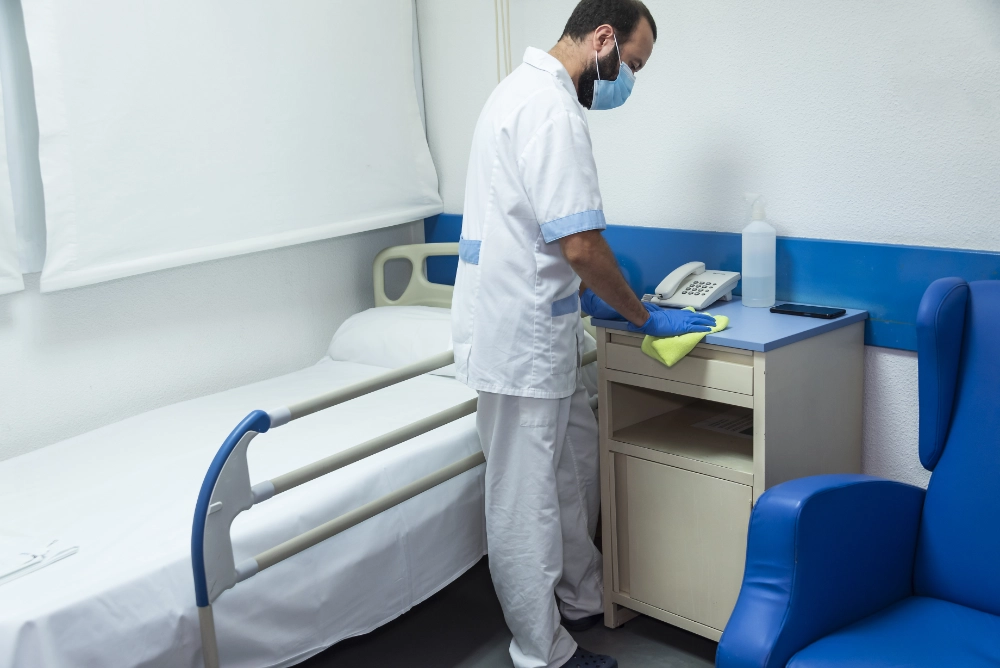
TL; DR: Healthcare cleaning should protect patients, staff, and visitors by focusing on hygiene risks that basic cleaning often misses. Clinics should expect a professional cleaner to follow a clear plan, clean high-touch areas properly, prevent cross contamination, and adapt to the service as the clinic changes.
Key Takeaways
A clinic can look tidy at first glance and still miss the cleaning standards patients expect. In healthcare settings, the real test is whether the routine protects high-touch areas, supports infection control, and helps the space feel safe.
That is why clinics, dental practices, GP surgeries, therapy rooms, and other patient-facing spaces need more than basic commercial cleaning. A professional cleaner should follow a clear routine that keeps the clinic clean, organised, and ready for every appointment.
A professional cleaner should not treat every room the same. Healthcare buildings have different risk levels, so the cleaning plan should reflect how people move through the site and where hygiene matters most.
Before recommending a schedule, a good cleaner should understand practical details such as:
This matters because a quiet admin office, a busy waiting room, and a treatment room should not be cleaned in exactly the same way.
Your cleaner should make it clear what is included, what is excluded, and which areas need special instructions. That should cover points such as:
A clear scope prevents confusion, protects your team, and makes the cleaning service easier to manage from day one
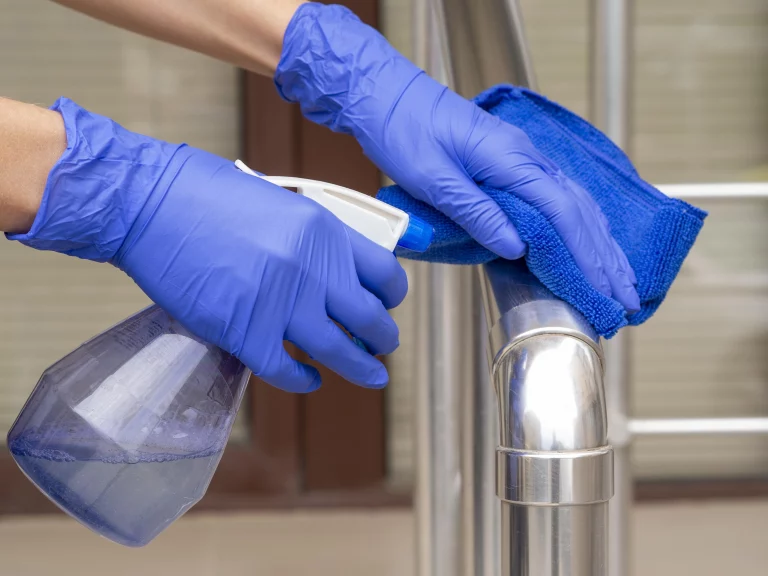
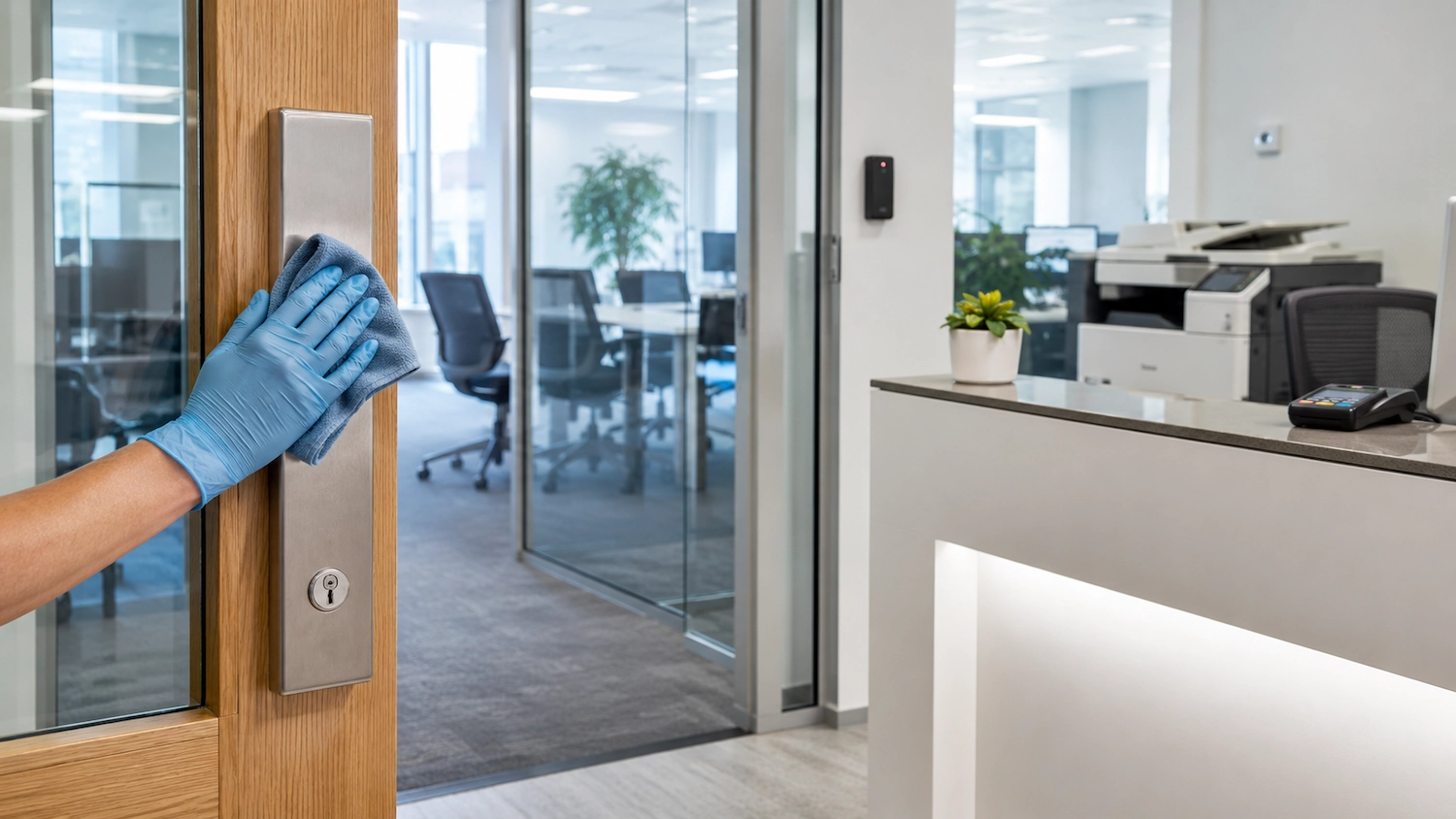
Many cleaning problems in clinics start with the places people touch all day without thinking about it. A floor may look spotless, but door handles, reception counters, chair arms, taps, light switches, and payment terminals can carry far more day-to-day hygiene risk.
The reception desk is often the first place patients approach, and it is also one of the most touched areas in the clinic. A professional cleaner should pay close attention to counters, sign-in points, seating, door plates, shared pens, payment devices, and any surfaces patients lean on or handle.
A clinic washroom should never feel like an afterthought, especially when patients may already feel vulnerable, unwell, or cautious about hygiene. Taps, flush handles, soap dispensers, hand dryers, door locks, bin lids, mirrors, floors, and skirting all need consistent cleaning, not just a quick wipe and a fresh bin liner.
Cross contamination happens when dirt, bacteria, viruses, or residue are carried from one area into another. In a clinic, that risk increases when cleaners use the wrong cloth, the wrong mop, or the wrong cleaning order between washrooms, waiting areas, and treatment spaces.
A professional healthcare cleaner should use separate equipment for different areas, especially washrooms and patient-facing rooms. Colour coded systems are not there to look organised on paper, but to stop the same cloth or mop head moving contamination from one space into another.
Professional cleaners should usually work from cleaner areas to dirtier areas, and from higher surfaces down to lower surfaces. This simple discipline helps avoid re-contaminating surfaces that have already been cleaned and keeps the process more controlled from start to finish.
A strong smell does not prove that a clinic has been cleaned well. The right products should be chosen for the surface, the task, and the level of hygiene required, without causing damage, residue, or discomfort for patients and staff.
A professional cleaner should understand which products are suitable for floors, desks, washrooms, touchpoints, seating, and non-clinical surfaces. They should also understand correct dilution, contact time, product labels, safe storage, and the difference between cleaning a surface and disinfecting it properly.
Clinics should expect cleaners to handle chemicals responsibly and follow safe working practices. This includes understanding COSHH requirements, using products as intended, keeping chemicals away from patients, and avoiding careless mixing or overuse.
A clinic needs cleaners who understand the seriousness of the environment they are working in. That does not mean every cleaner is a clinician, but it does mean they should be trained, vetted where appropriate, and covered by proper insurance.
DBS checked cleaners are especially important where vulnerable people, children, care users, or sensitive environments may be involved. Insurance also matters because clinics need confidence that the cleaning company is prepared to take responsibility if accidental damage, access issues, or on-site problems occur.
Training is not just a certificate in a folder.You should see it in how cleaners separate equipment, follow instructions, handle products, respect restricted areas, report issues, and keep a consistent standard without needing to be chased.
A professional cleaner should know when to clean and when to stop. Clinics contain equipment, records, medication areas, samples, specialist waste, and private information that should never be handled casually.
Before cleaning starts, your clinic should agree which rooms, equipment, surfaces, cupboards, and waste streams are outside the cleaning scope. This protects patients, staff, records, and cleaners from avoidable mistakes.
Be cautious of any provider that says yes to everything without asking how your clinic operates. A serious healthcare cleaning company will ask about access, risk areas, security, restricted zones, reporting, and how issues should be raised.
Cleaning standards can slip when no one checks the work. A professional cleaning company should have a way to review standards, collect feedback, and fix issues before they become repeated complaints.
Quality checks should be simple but regular enough to catch issues before patients or staff notice them. A reliable cleaning company may use:
These checks help spot missed touchpoints, tired washrooms, dusty edges, and gaps in the routine before they become repeated problems.
Clinics change, so the cleaning plan should be reviewed when the site gets busier or the layout changes. That may include:
A good cleaning routine should move with the clinic, not hold it back.
LZH Cleaning Group supports clinics, dental practices, veterinary practices, and healthcare facilities in Bedford and nearby areas with reliable healthcare cleaning services built around each site’s routine. The team creates tailored plans that consider opening hours, patient areas, staff spaces, hygiene priorities, and daily clinic use.
For healthcare settings, LZH keeps the service practical with DBS checked and insured operatives, flexible cleaning options, and no long-term contract pressure. The team also focuses on quality checks and clear communication, so clinic managers know what is being cleaned and who to contact if anything needs adjusting.
If your clinic cleaning feels inconsistent, rushed, or too basic for a healthcare setting, it is worth reviewing before small issues become bigger problems. A better cleaning service should make your clinic easier to manage, more reassuring for patients, and more professional for the people working there every day.