Deep Cleaning vs Regular Cleaning: The Difference Most Businesses Notice Too Late
Learn the difference between deep cleaning and regular cleaning, what each includes, and when your premises may need one or both.

TL;DR: A clean office doesn’t happen by luck, it happens when the basics are done consistently in the busiest areas first. Split the work into a quick daily reset (bins and touch points) and a proper weekly clean by zone, then keep standards honest with a five-minute check and photos.
Key takeaways:
If your office “gets cleaned weekly” but the kitchen smells off by Wednesday, you do not have a cleaning problem. You have a scope problem, and it quietly costs you in complaints, sick days, and that low-grade feeling that the place is never quite right.
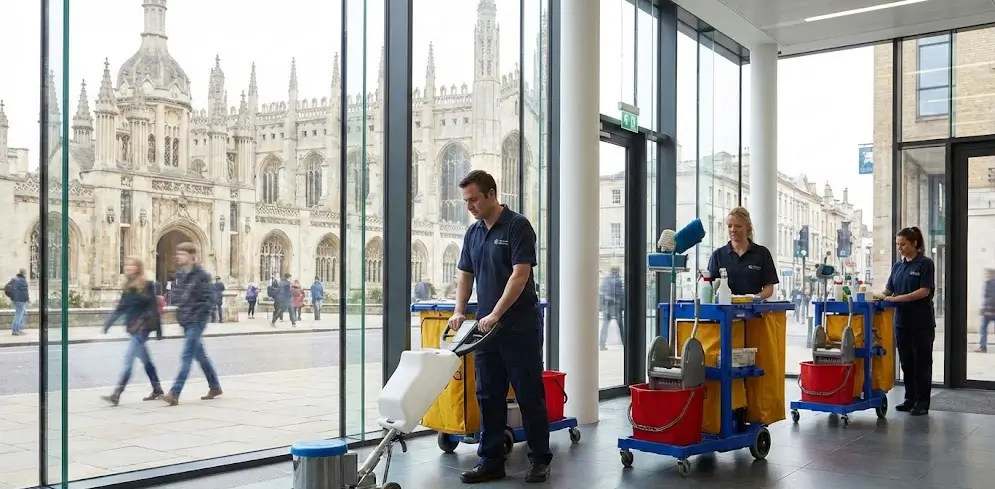
This guide gives you a practical weekly checklist for office cleaning Cambridge teams can actually deliver, and for managers who are tired of chasing cleaners or re-explaining the basics. Use it with an in-house rota, a facilities team, or a professional service, as long as one person owns the standard.
Weekly cleaning often becomes “whatever got noticed,” so standards drift and the same problems linger. Fix it by defining what “done” means, assigning zones, and checking the same few points
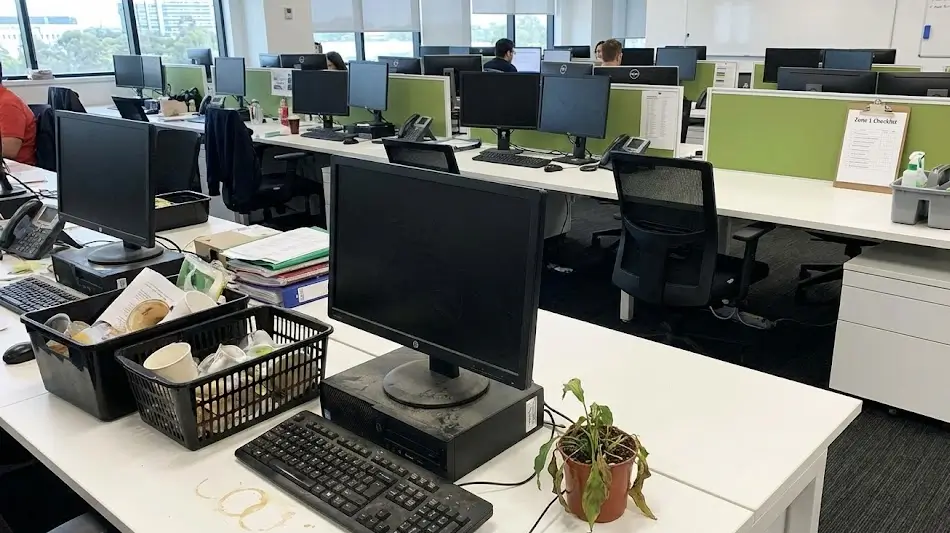
Most complaints come from a few high-traffic spots, usually the kitchen, washrooms, meeting rooms, entrances, and bins. Keep those five in check and the whole office feels cleaner, but let them slide and everything else feels pointless.
A quick tidy can make the place look fine for an hour, but it won’t hold. Routine cleaning is what keeps it hygienic all week and ready for meetings whenever they pop up.
If you want office cleaning Cambridge workplaces can rely on, you need a clear scope, not a generic promise. A written scope also protects you, because it prevents the slow creep of “we assumed that was included.”
Start with zones, not rooms. Zones are easier to assign, easier to clean efficiently, and easier to check. Write down your cleaning windows, access method, alarm notes, and any areas that are off-limits. Then list task frequency, because “weekly” is too blunt for kitchens and toilets.
Your checklist should tell someone how the space should feel when it’s finished. For example: no odour in the kitchen, no sticky tables, no smeared mirrors, no bin leaks, and no grit at the entrance. That is what stops cleaning from turning into a debate. It also stops the office from normalising mess.
If you squeeze everything into one weekly visit, you will always miss what matters most. Busy workplaces need a short daily reset in high-traffic areas, then a deeper weekly clean that removes build-up.
You can run this as one long weekly visit or spread it across the week. The end result matters more than the pattern, as long as standards stay consistent.
First impressions start here, and grit gets tracked in. Vacuum mats, then vacuum or mop hard floors to the edges, and dry or swap damp mats in wet weather.
Clean glass, then disinfect handles, push plates, buzzers, and sign-in screens. Wipe reception touch points (desk, card readers, pens, visitor chairs, brochure stands) and reset clutter.
Mess builds up fast here, and nobody likes being singled out. Stick to shared touch points (keyboards, mice, phones, chair arms, drawer pulls, switches) and leave personal items alone.
Wipe desks, ledges, and partition tops, spot-clean wall marks, and clear dust behind monitors and along skirting. Empty desk bins, replace liners, wipe lids, and check for leaks.
Meeting rooms look fine until someone sits down. Sticky table edges, smudged screens, and dusty corners give the game away.
Weekly sweep: tables and chairs (tops, arms, backs, undersides), screens and whiteboards, and shared kit (remotes, mics, cables, touch panels). Finish by vacuuming edges and under the table, then mop hard floors and let them dry before the next booking.
A dirty kitchen kills morale fast, and any odour spreads through the whole office.
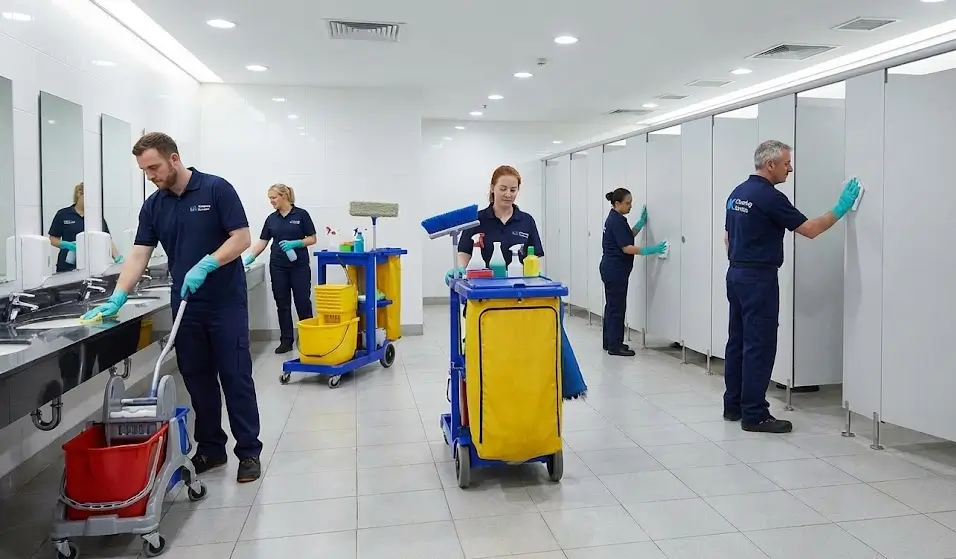
If your workplace is busy, once-a-week washroom cleaning won’t hold. A midweek refresh stops grime and smells turning into complaints.
On each clean, hit toilets and urinals properly (hinges, flush plates, base and edges), then do sinks, taps, splash zones, mirrors, and cubicle locks, handles, and switches. Mop floors and corners with the right dilution, then top up soap, paper, and sanitary supplies so you don’t run out midweek.
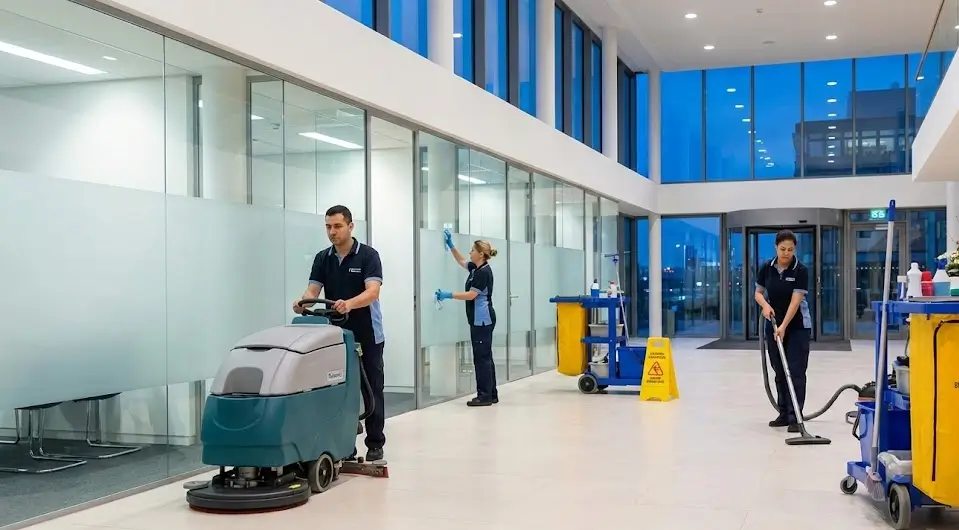
These areas get touched all day and wear fast as dirt gets carried through the building. Vacuum or mop, and keep entrance grit down so it doesn’t scratch floors or make the place look tired.
Floors are what people notice, so “done” includes edges and under furniture. Vacuum carpets slowly with overlaps and spot-treat stains early, then sweep or vacuum hard floors before mopping with the right dilution, changing water when it turns grey, and finishing under sofas, chair bases, and the kitchen table.
Messy waste points make the whole office feel off, and leaks can attract pests. Empty waste and recycling, replace liners, wipe lids and bin exteriors, and disinfect the floor around them, and if leaks keep happening, fix the setup with better liners, bigger bins, or a tighter routine so you’re not mopping the same mess every week.
You do not need a clipboard culture. You need a quick check that catches drift early.
If those five look and smell clean, you’re usually in good shape.
If you’re weighing up DIY vs hiring help, this breakdown of the benefits of professional commercial office cleaning will help you decide what’s worth outsourcing and what’s not.
Reliable office cleaning, without the hassle. LZH Cleaning Group follows a clear scope, with sensible cleaning frequencies and a flexible, contract-free plan around your hours, backed by DBS-cleared, fully insured staff and regular quality checks.
For details, see our page on commercial cleaners in Cambridge for coverage and what’s included. If you’re in Cambridge or nearby areas like Chesterton, Cherry Hinton, Milton, Trumpington, or Fulbourn, send your postcode and we’ll confirm coverage.
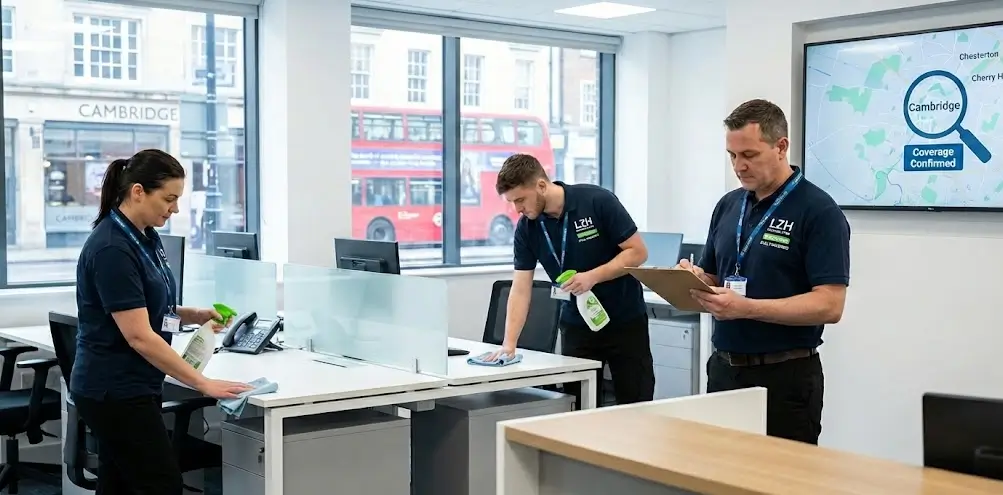
If you want office cleaning Cambridge businesses can rely on without you managing it between real work, the next step is straightforward. Send your postcode, site type, approximate size, and preferred cleaning times, and LZH Cleaning Group will arrange a walkthrough, then provide a clear scope and quote.