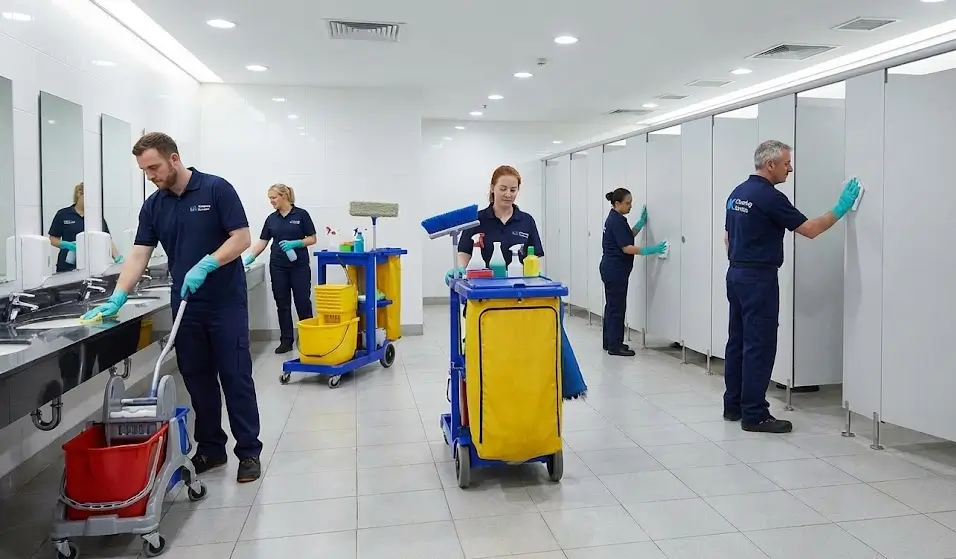
A lot of businesses assume cleaning is all the same until the small issues start piling up. Floors begin to look worn, washrooms lose their freshness, and the whole space stops feeling as clean as it should.
That is when the question usually comes up: is regular cleaning enough, or is it time for a deep clean? Knowing the difference helps you choose the right service, keep standards in place, and make sure your premises stay clean, presentable, and easier to manage.
Why This Question Matters More Than People Think
It is easy to assume regular visits will cover everything. In reality, regular cleaning and deep cleaning serve different purposes, and treating them as the same thing often leads to gaps.
Regular cleaning helps you stay on top of the obvious day-to-day mess. Deep cleaning goes further and deals with the built-up dirt, hidden grime, and neglected areas that routine cleaning alone may not fully resolve.
For offices, schools, healthcare settings, warehouses, communal spaces, and rental properties, that difference can affect appearance, hygiene, staff confidence, and even how your business is judged by visitors. A clean-looking site is good, but a thoroughly cleaned site gives people far more confidence.
What Regular Cleaning Is Really Designed To Do
Regular cleaning is all about maintaining a consistent baseline. It keeps your premises tidy, usable, and presentable between one visit and the next.
This is usually the service businesses book on a daily, several-times-weekly, or weekly basis, depending on foot traffic and how the space is used. The aim is not to restore heavily affected areas in one go, but to stop normal mess from getting out of hand.
What regular cleaning usually includes
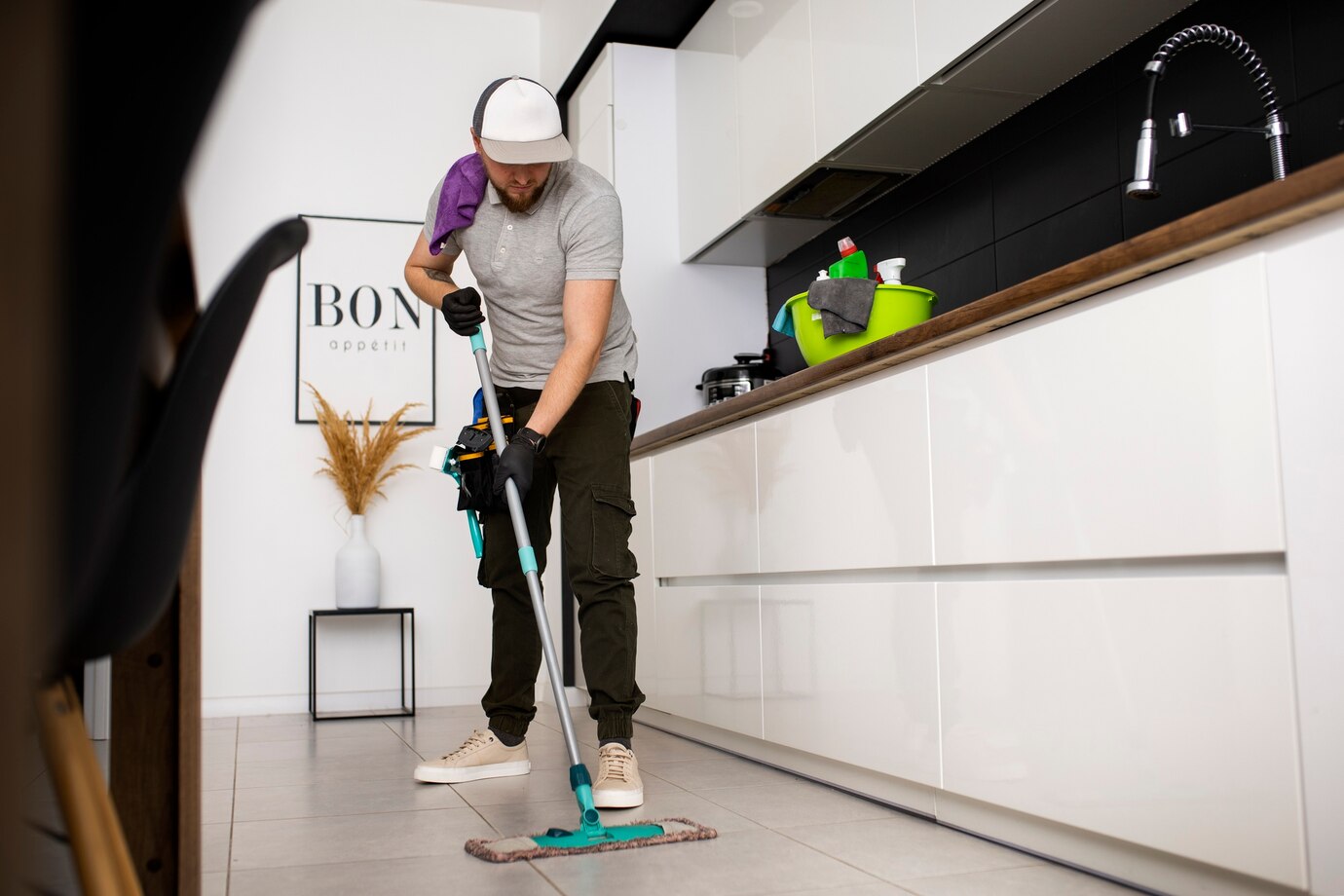
Regular cleaning often covers the everyday tasks that make the biggest visible difference. That may include vacuuming, mopping, emptying bins, wiping desks and surfaces, cleaning kitchens and washrooms, and keeping shared spaces neat.
It can also include sanitising high-use contact points, topping up consumables, and spot-cleaning marks before they become harder to remove. In busy workplaces, this steady routine is what keeps standards from slipping.
Where regular cleaning works best
Regular cleaning is ideal for businesses that need consistency. Offices, communal areas, schools, reception spaces, and commercial sites with predictable use often benefit most from having a routine plan in place.
It is especially useful when appearance matters every day. If clients, staff, tenants, guests, or visitors are using the space often, regular cleaning helps keep the environment ready without constant catch-up work.
What regular cleaning does not always solve
This is where many people misjudge the service. Regular cleaning keeps things under control, but it does not always tackle the deeper build-up that collects over time.
Limescale, grime in corners, dirt around skirting boards, marks on walls, neglected vents, build-up behind furniture, and heavily used washroom fixtures may still need more detailed attention. Even a well-run routine can leave these areas needing a proper reset.
What Deep Cleaning Actually Means
Deep cleaning is a more detailed, intensive service designed to reach the areas and issues that routine cleaning may only touch lightly. It goes beyond surface-level presentation and focuses on a more thorough clean across the site.
Think of it as a reset rather than a maintenance visit. The goal is to lift the standard of the whole space, not just keep it ticking over.
What deep cleaning usually includes
Deep cleaning often involves close attention to hard-to-reach, high-build-up, or often-overlooked areas. This can include edges, skirting boards, behind and under furniture, internal glass, detailed washroom descaling, door frames, fixtures, high-touch points, and stubborn grime on surfaces and floors.
In some environments, it may also involve more detailed kitchen cleaning, deeper sanitisation, appliance exterior cleaning, and focused treatment of spaces that have fallen below the expected standard. If you want a clearer idea of what that can involve in practice, it helps to look at a dedicated deep cleaning service rather than assuming every cleaning visit covers the same level of detail.
The exact scope depends on the site, which is why bespoke quotes matter.
When deep cleaning makes the biggest impact
Deep cleaning makes sense when regular standards are no longer enough on their own. That could be after a busy period, before an inspection, at the start of a new contract, after sickness has spread through a team, or when a site simply feels tired even after it has been cleaned.
It is also common before reopening a space, after building work, during seasonal resets, after tenant changes, or when a business wants to bring neglected areas back up to standard. In other words, deep cleaning is often the service that puts things right before regular cleaning keeps them right.
Why deep cleaning is not just for emergencies
Some businesses only think about deep cleaning when things have already become obvious. That approach usually costs more time and effort later because the longer grime sits, the harder it is to remove properly.
Planned deep cleans can actually make routine cleaning more effective. Once a site has been brought back to a better standard, day-to-day cleaning becomes easier to maintain and results tend to stay more consistent.
Deep Cleaning vs Regular Cleaning: The Real Difference
The simplest way to understand deep cleaning vs regular cleaning is this: regular cleaning maintains, while deep cleaning restores. One keeps standards steady, and the other lifts standards when routine work alone is no longer enough.
Regular cleaning focuses on visible upkeep and recurring tasks. Deep cleaning focuses on the detailed work needed to tackle hidden grime, built-up residue, and areas that are easy to miss during standard visits.
Frequency
Regular cleaning happens on an ongoing basis. It is part of a fixed routine built around the needs of the site.
Deep cleaning happens less often, but it is more intensive. It may be booked as a one-off service, a periodic reset, or part of a wider cleaning plan.
Scope
Regular cleaning covers the practical day-to-day essentials. It is designed to stop mess from building up too quickly and to keep the site looking orderly.
Deep cleaning has a broader and more detailed scope. It targets the places that need extra time, closer attention, and more thorough work.
Time and labour
A regular clean is generally quicker because the tasks are more routine. A deep clean usually takes longer because more areas are covered in more detail.
That extra time is what creates the difference in results. You are not just getting a tidy-up, you are getting a more complete clean across the premises.
Best use case
Regular cleaning is best for maintaining standards across busy sites. Deep cleaning is best for resetting standards, improving problem areas, and supporting better long-term upkeep.
Most businesses do not need to choose one or the other forever. In many cases, the best result comes from combining both.
Signs Your Premises May Need a Deep Clean
A site can look acceptable at first glance and still need more detailed work underneath. That is why it helps to watch for the practical warning signs.
The space still feels dirty after cleaning
This is one of the clearest signs. If the premises are being cleaned but still feel dull, marked, stale, or worn, the issue may be deeper build-up rather than poor routine alone.
Problem areas keep coming back
When the same washroom stains, floor marks, greasy surfaces, or dusty edges keep reappearing, it usually means they need a more detailed treatment. Regular cleaning may manage them, but it may not fully remove the cause.
You are preparing for an important moment
Inspections, client visits, staff returns, property handovers, and event setups often call for a higher standard than normal. A deep clean helps close the gap between everyday maintenance and a sharper presentation.
Your current routine has no reset built into it
Even a good schedule can become stretched over time. If there is no periodic deep cleaning built into the plan, standards often drift slowly before anyone notices.
When Regular Cleaning Is Still the Right Choice
Deep cleaning is useful, but it is not the answer to every problem. Some businesses assume they need a deep clean when what they actually need is a more reliable routine.
If your premises are already in reasonable condition and the main challenge is staying on top of daily use, regular cleaning may be the more practical option. A consistent schedule can often prevent the need for larger corrective work later.
This is particularly true in offices, schools, communal blocks, and shared workspaces where dirt builds steadily rather than all at once. In those cases, frequency and consistency matter just as much as intensity.
Why the Best Cleaning Plans Often Use Both
This is the part many businesses miss. Deep cleaning vs regular cleaning is not always an either-or decision.
A strong cleaning plan often uses regular cleaning for maintenance and periodic deep cleaning for reset work. That combination helps businesses keep standards stable without letting hidden build-up drag the whole site down.
For example, an office might have routine cleaning through the week and then book a deeper clean quarterly. A healthcare or high-traffic environment may need a more tailored mix based on risk, usage, and inspection standards.
The right setup depends on your building, your schedule, and the people using the space. That is why tailored cleaning plans tend to work better than one-size-fits-all packages.
Choosing the Right Cleaning Partner
LZH Cleaning Group works with businesses that need cleaning plans to be practical, reliable, and tailored to real site conditions. We do not rely on vague promises or generic packages that ignore how your premises actually operate.
We provide bespoke cleaning services across Bedford and surrounding areas, covering a wide range of sectors including offices, healthcare settings, schools, warehouses, events, Airbnb turnovers, and other commercial environments. That breadth matters because different sites need different priorities.
Tailored scopes that fit the site
No two premises use space in exactly the same way. We build cleaning scopes around your layout, foot traffic, timing, and operational needs so the service makes sense in practice, not just on paper.
Flexible scheduling that works around you
Cleaning should support your day, not disrupt it. We offer flexible scheduling so clients can arrange cleaning in a way that suits their site, staff, visitors, and operating hours.
Quality checks you can count on
Consistency is one of the biggest concerns in commercial cleaning. Our approach puts focus on clear scopes and quality checks, helping clients feel confident that the service stays on track.
A practical, straightforward service
We keep the process simple. You tell us what the site needs, we assess the space, and we recommend a cleaning setup that matches the standard you want to maintain.
Choosing the Right Service for Your Premises
If you are comparing deep cleaning vs regular cleaning, start with the condition of the site rather than the label of the service. Ask whether you are trying to maintain a good standard, restore a slipping one, or do both.
If your site is generally under control but needs steady support, regular cleaning may be enough. If grime, neglected areas, and presentation issues have started creeping in, a deep clean may be the right next step.
In many cases, the smartest move is to combine both in a way that suits your building and your workload. That gives you the immediate improvement of a deeper clean and the long-term stability of a regular routine.
Why Choose LZH Cleaning Group
If your workplace, site, or commercial premises needs more than a quick tidy, LZH Cleaning Group can help you put the right plan in place. Whether you need a one-off deep clean, a regular cleaning schedule, or a tailored mix of both, the service can be shaped around your space, schedule, and standards.
Contact LZH Cleaning Group today to discuss your site, request a quote, or book a cleaning service that keeps your premises clean, presentable, and ready for the people who use it every day.