Deep Cleaning vs Regular Cleaning: The Difference Most Businesses Notice Too Late
Learn the difference between deep cleaning and regular cleaning, what each includes, and when your premises may need one or both.

TL;DR: Commercial cleaning prices in Cambridge swing because most quotes are really quotes for time, not outcomes, and the time changes fast once you factor in washrooms, floors, foot traffic, and access rules. If you want a number you can trust, get the scope nailed down first, then choose a schedule that matches how your site is actually used.
Key Takeaways:
If you are trying to pin down commercial cleaning Cambridge cost, you have probably noticed the same thing everyone else does: the first price you hear is rarely the price you end up paying. That is not because cleaning is mysterious, but because the quote only makes sense when the scope is specific, the access is clear, and the standards are agreed upfront.
Most businesses aren’t paying for “cleaning”, they’re paying for a workplace that looks and feels looked-after every day, from washrooms to bins to floors. When the brief is vague, you either get rushed work to hit a cheap price or a stream of extras later, so it’s smarter to price a clear plan around how your site really runs and keep standards consistent.
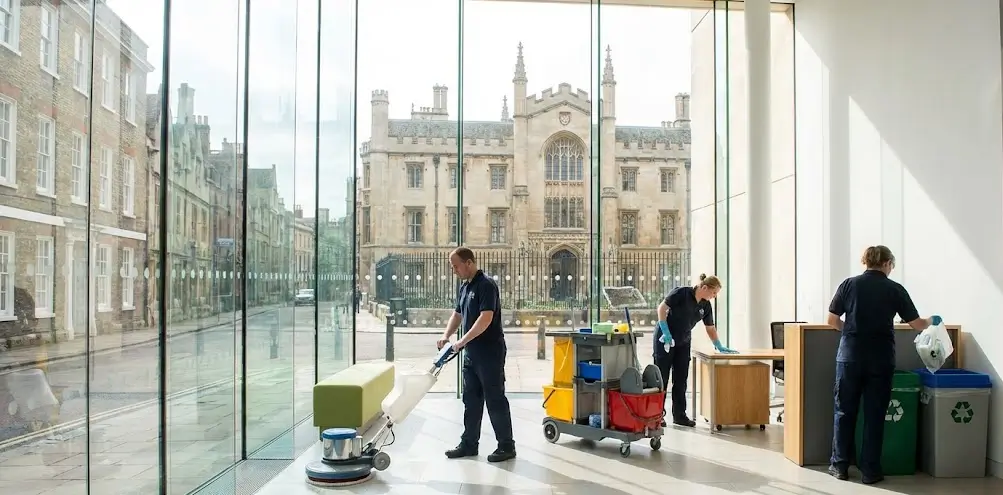
Prices move because labour is the biggest component, and wages and staffing costs have been climbing across the UK cleaning sector. Most commercial cleaning in and around Cambridge is priced either per hour (time-based), per square metre (area-based), or as a fixed monthly figure that is built from those two models.
Most quotes land around £18 to £30 per cleaner per hour, depending on complexity, timing, and risk level. A quiet office clean at 6am is a different job to an evening clean in a multi-tenant building with tight security and busy washrooms.
For bigger premises, you may hear maintenance cleaning discussed at roughly £1.00 to £4.00 per m² when the scope is simple and the site is efficient to clean. Treat it as a guide only, because extra washrooms, awkward layouts, and high-touch areas can add more time than the floor area suggests.
Weekly cleaning for a small, low-traffic office often fits the hourly model when tasks and access are straightforward. Daily cleaning for a busier workplace usually suits a fixed monthly plan, and higher-risk sites like clinics or schools tend to cost more because the standards and checking are stricter.
If you want to understand a quote, ignore the headline number and look for what is driving time, risk, and friction in the job.
Weekly cleaning costs more per visit because dirt builds up, so the cleaner needs more time. Daily cleaning is quicker each time but more frequent, and it usually keeps standards steadier and avoids costly catch-up cleans.
Washrooms take the most time because they involve more steps and higher hygiene risk, and they’re where complaints start. Two similar-sized offices can price very differently if one has one toilet and the other has several high-traffic washrooms.
Hard floors that need machine work or careful edging take longer than a simple vacuum-and-mop, and the wrong method can ruin the finish. Carpets also add time because “tidy” isn’t the same as clean, so periodic extraction is often priced separately.
Quiet back offices stay presentable with light daily work, while receptions, stairs, and kitchens look tired fast. High-touch points like handles, switches, and kitchen fronts also add time because grime shows there first.
Cleaning during business hours is slower because cleaners work around people, meetings, and sensitive areas. Out-of-hours can be faster, but it often needs tighter supervision, lone-working safety, and clear keyholding.
Some sites need stricter methods because poor cleaning carries bigger consequences, like healthcare areas or high-risk washrooms. Guidance expects cleaning frequency to match risk, so a cheap generic spec is risky when standards must be documented and consistent.
Low quotes are often low because they leave out jobs like internal glass, deep kitchen detail, high dusting, consumables, or periodic floor work. A better quote spells out what’s included, how often it happens, and how changes are handled.
Here’s a quick way to ballpark your costs without overthinking it:
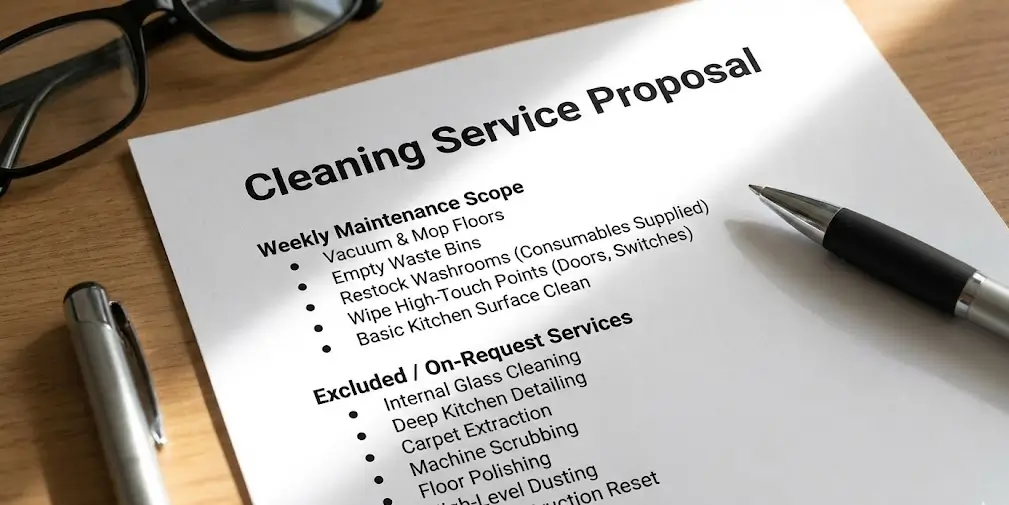
This is where most quote arguments come from, because two companies can sound like they are offering the same thing while pricing completely different scopes. A typical maintenance clean usually includes vacuuming and mopping, emptying bins, cleaning and restocking washrooms (if you supply consumables), wiping high-touch points, and basic kitchen clean-down.
Tasks that often sit outside a basic maintenance scope include internal glass, deep kitchen detailing, carpet extraction, machine scrubbing, polishing, high-level dusting, and any kind of “reset” after building work. If you want fewer surprises, ask the cleaner to list what is included weekly, what is included monthly or quarterly, and what is only done on request.
If you want commercial cleaners in Cambridge who are easy to work with, you need consistent standards and a plan that fits how your site runs. LZH Cleaning Group builds bespoke schedules around your space and hours, so you are not paying for a generic checklist, and you can check coverage here: commercial cleaners in Cambridge.
Their DBS-cleared, fully insured team is backed by regular quality checks, so the clean stays sharp after week one. They cover Cambridge and nearby areas like Chesterton, Cherry Hinton, Milton, Trumpington, and Fulbourn, keeping support local and responsive.
If you want a commercial cleaning Cambridge cost that reflects reality, stop guessing from a form and book a quick walkthrough with a clear scope. Send your postcode, site type, approximate size, and preferred cleaning times, and LZH Cleaning Group will come back with a plan that fits how your site runs.